

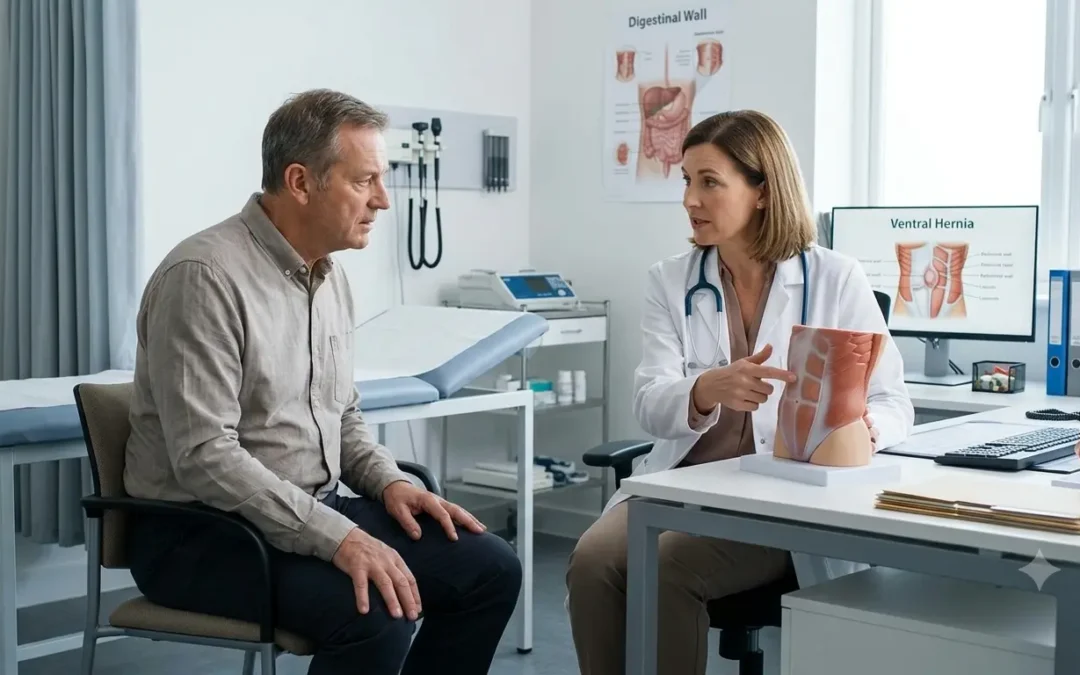
A hernia after abdominal cancer surgery means tissue, sometimes a loop of bowel, has pushed through a weak spot in the abdominal wall. Most often it’s at the line of the scar, which is why it’s called an incisional hernia. It can also appear around a stoma, and that’s a parastomal hernia. During an abdominal operation the muscle layer is cut, then stitched back together, and for the first months that repair is weaker than normal muscle. If it doesn’t heal strongly, the pressure from coughing, straining or lifting can push contents through the gap, and you notice a bulge. It’s common. After major abdominal surgery, somewhere between 1 in 10 and 1 in 5 people develop one. People with cancer can be at higher risk for reasons such as chemotherapy, weight loss or a wound infection.
Dr. Sandeep Nayak, who provides cancer treatment in Bangalore, says many of the risk factors can be changed before surgery. “A hernia is a failure of the abdominal wall to heal strongly. Things that weaken healing, like smoking, poor nutrition, uncontrolled diabetes, excess weight and wound infection, raise the risk. Careful closure of the muscle layer with small stitches, and mesh in selected high-risk patients, lowers it. After surgery, follow the lifting advice you’re given, and tell your team about any new bulge, especially if it’s painful.”
If you’re about to have abdominal cancer surgery and want to lower your chances of a hernia, it helps to talk through your risk factors before the operation. Share your plan with our team, and they’ll explain what can be done before, during and after surgery.
Hernia After Abdominal Surgery: Why It Happens?
- The abdominal wall is cut and repaired in most operations, and the scar takes months to reach full strength. Until then, pressure inside the abdomen can push through weak spots. Hernias are most likely to appear in the first year or two, though they can show up later.
- Cancer operations are often long and extensive, which adds to the risk. In one study of cytoreductive surgery with HIPEC, about 17 in 100 patients developed an incisional hernia, as described on our HIPEC page. Bowel operations, such as those on our colon cancer treatment page, carry a similar range.
- A stoma is a built-in weak spot, because the bowel passes through the muscle wall. In one bowel cancer series, about 1 in 5 people with a permanent stoma developed a parastomal hernia.
- Reported rates vary a lot, from a few in 100 to more than 20 in 100, depending on the operation, how long people are followed and how hernias are detected.
Incisional Hernia After Cancer Surgery: Who Is at Higher Risk?
- Your own health matters. Obesity, smoking, diabetes, poor nutrition, older age, a long-term cough and steroid use all raise the risk.
- Cancer treatment can play a part. Chemotherapy and radiation can slow healing, and chemotherapy given before surgery has been linked to a higher risk of hernia. Low protein levels in the blood, which are common in people with cancer, add to it.
- The operation itself counts. Midline incisions carry a higher risk than transverse ones, long operations and long incisions add to it, and so does going back in through the same scar. Where an operation can be done through smaller cuts, as in our post on minimally invasive surgery, that can help.
- A wound infection is one of the strongest triggers, raising the risk several times over. Your team weighs these factors in advance, often at a tumour board.
What Lowers the Risk, and What Happens If You Get One?
There’s no guarantee, but a few things make a real difference.
- Before surgery, stop smoking if you can, improve your nutrition, and get diabetes under control. Your team may also advise on weight.
- During surgery, how the muscle layer is closed matters. In a large trial, closing with small stitches, about 5 mm apart, cut the one-year hernia rate from about 21 in 100 to 13 in 100.
- Mesh can help in high-risk cases. A review of seven trials found that mesh placed at the time of a stoma cut parastomal hernias from about 32 in 100 to 11 in 100, though mesh can raise the rate of wound infection.
- After surgery, follow the lifting advice you’re given, keep the wound clean, and treat a cough or constipation so you’re not straining.
- If you do get a hernia, a small one that doesn’t bother you can be watched. Many are repaired later, often with mesh. A sudden painful or hard bulge needs urgent care.
Frequently Asked Questions
1.Why do some patients develop a hernia after abdominal cancer surgery?
The muscle layer of the abdominal wall is cut and stitched during surgery, and the repair is weak at first. If it doesn’t heal strongly, pressure from coughing, lifting or straining can push tissue through the gap. Cancer treatment, weight loss and infection can add to the risk.
2.How common is an incisional hernia after cancer surgery?
Rates vary from a few in 100 to over 20 in 100, depending on the operation and how long people are followed. After major abdominal surgery in general, about 10 to 20 in 100 develop one.
3.Can a postoperative hernia be prevented?
Not always, but the risk can be lowered. Stopping smoking, eating well, controlling diabetes and weight, careful closure with small stitches, and mesh for some high-risk patients and stomas all help.
4.When does a hernia need urgent attention?
If a bulge becomes hard, painful or red, or can’t be pushed back, or you have vomiting or can’t pass gas or stool, get medical help straight away.
Disclaimer
This article is for patient education only. It is not medical advice and does not replace consultation with a qualified doctor. Suitability, risks and outcomes differ for each person.
References: