

This website is being reviewed and updated in line with the National Medical Commission (NMC) guidelines on ethical advertising and public communication by registered medical practitioners.

No.96/A /9/1, 42nd cross, 3rd Main, 8th BIock, Jayanagar Bengaluru

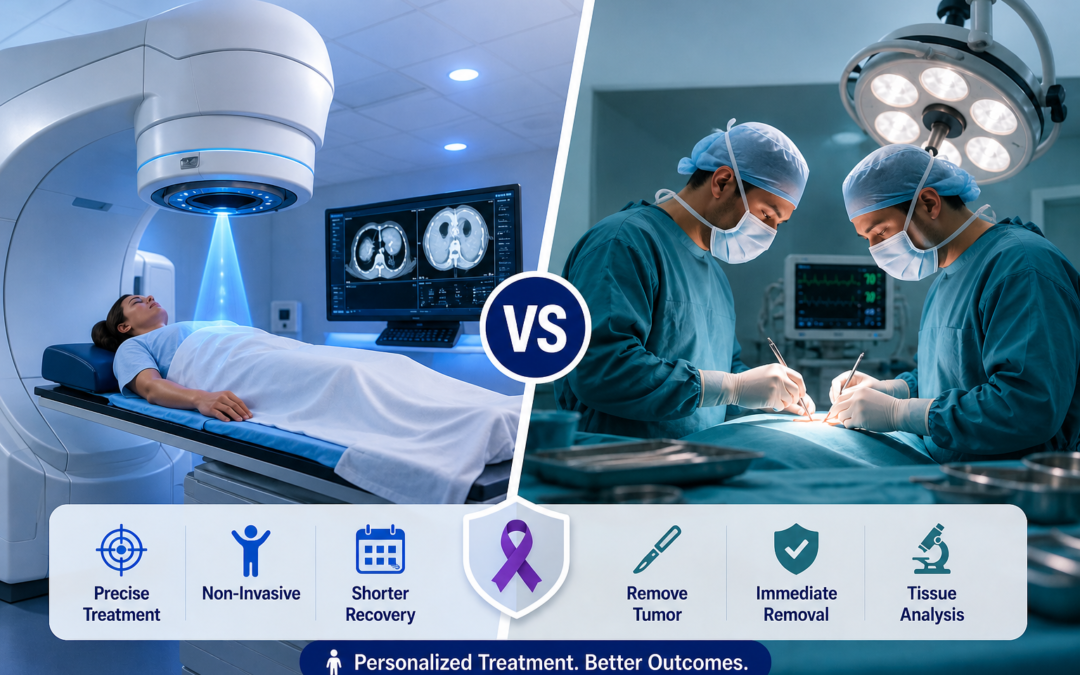
Radiation Therapy vs Surgery for Early-Stage Cancer

Radiation Therapy vs Surgery for Early-Stage Cancer

Here’s something that surprises people. For a lot of early-stage tumours, either one can cure the cancer. Surgery takes the tumour out, and a pathologist then studies it. Radiation destroys it from the outside, no cuts, and quite often the organ keeps working the way...
What Is SBRT? Benefits, Uses and Eligibility

What Is SBRT? Benefits, Uses and Eligibility

SBRT, short for stereotactic body radiotherapy, is a way of giving very high doses of radiation to a tumour with pinpoint accuracy, in just one to five sessions instead of weeks of daily treatment. You may also hear it called SABR. Nothing is cut open, and it’s done...

Can Cancer Pain Be Managed Without Heavy Medication?

Can Cancer Pain Be Managed Without Heavy Medication?

Often, yes. Cancer pain can usually be eased without leaning only on heavy medicine like strong opioids, though the right mix depends on where the pain comes from and how bad it is. Doctors tend to combine several things: milder painkillers, treatment aimed at the...

How Do You Cope With Anxiety After a Cancer Diagnosis?

How Do You Cope With Anxiety After a Cancer Diagnosis?

Most people cope in layers. First comes getting the facts in a form you can take in, then people to lean on, and if the fear is still bigger than both, a professional who does this for a living. Anxiety after a cancer diagnosis is close to universal, and it responds...
What Is SBRT? Benefits, Uses and Eligibility

Precision Oncology: Is Genomic Testing Worth It for You?

Precision oncology means treating the particular genetic faults in your cancer, not just the organ it started in. A lab studies your tumour’s DNA, finds the changes driving its growth, and your oncologist picks drugs aimed at those changes, where such drugs exist....