
Yes, there’s genuine promise here, though promise and proven aren’t the same thing. Personalized mRNA vaccines are showing encouraging early results in clinical trials for glioblastoma, one of the hardest cancers to treat, but they remain investigational. Nobody’s walking out of a clinic today getting this as standard treatment. What’s exciting is the concept itself, a vaccine built from a patient’s own tumor, teaching the immune system to recognize and attack something it previously ignored.
Dr. Sandeep Nayak, who provides the Best Cancer Treatment in Bangalore, follows this research closely given how limited glioblastoma treatment options have historically been. “Glioblastoma has been brutally resistant to most of what oncology throws at it, surgery, radiation, chemotherapy, the outcomes have stayed stubbornly difficult for decades. A personalized mRNA vaccine for glioblastoma represents a genuinely different approach, using the tumor’s own genetic signature to build something specific to that patient. Early trial data is encouraging. It’s not a cure we can offer yet, but it’s the kind of research direction worth paying attention to.”
Want to understand where glioblastoma treatment research currently stands?
How Would a Personalized mRNA Vaccine Actually Work?
- The concept borrows directly from the mRNA technology that became widely known through recent vaccine development, applied here in a very different context.
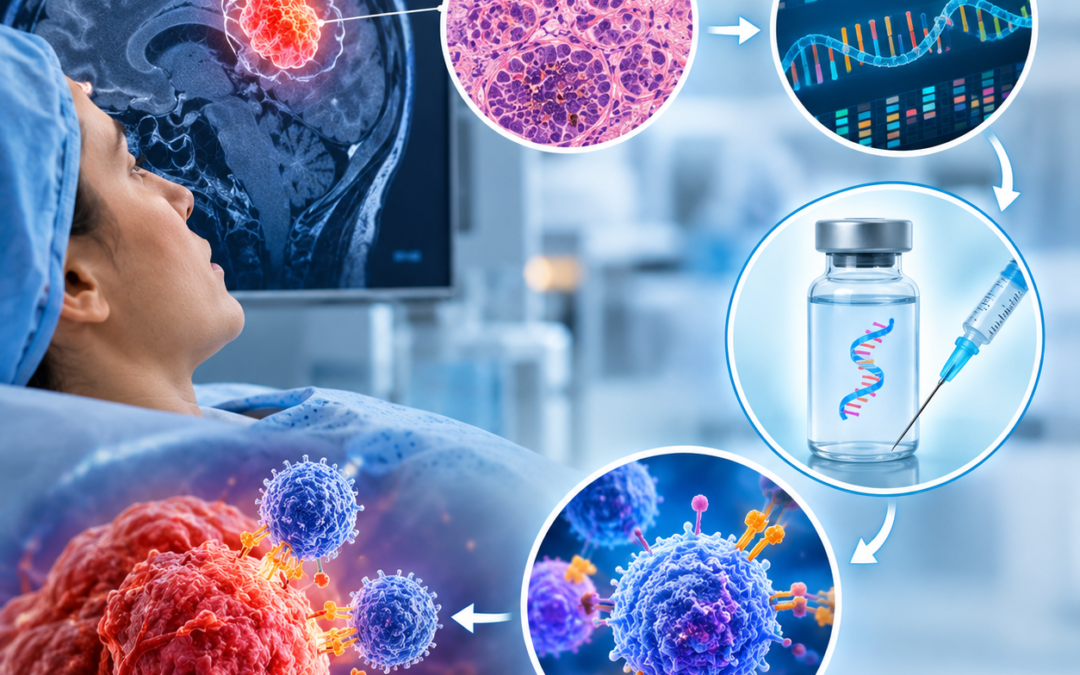
- A sample of the patient’s own tumor gets analyzed genetically first, identifying specific mutations and proteins unique to that individual’s cancer, since no two glioblastomas are genetically identical.
- That genetic information gets used to design an mRNA vaccine specific to those tumor markers, essentially giving the immune system a detailed description of what to look for and attack.
- Once administered, the vaccine is intended to train immune cells to recognize those specific tumor markers, potentially allowing the body’s own defenses to target cancer cells that would otherwise go unnoticed.
- This differs fundamentally from a standard preventive vaccine. It’s not preventing glioblastoma from occurring, it’s attempting to treat an existing tumor by activating a more targeted immune response against it specifically.
What Does The Current Research Actually Show?
Why Choose MACS Clinic for Glioblastoma Treatment Guidance?
Dr. Sandeep Nayak’s team stays current with emerging research like personalized mRNA vaccines, providing patients and families honest context about what’s proven, what’s promising, and what’s still experimental. Precision oncology molecular testing plays a role in understanding a specific tumor’s biology, which matters regardless of which treatment path, established or investigational, ends up being relevant.
For patients and families navigating a glioblastoma diagnosis, the full range of current treatment options gets discussed clearly, without overstating what experimental approaches can currently offer. Want to discuss glioblastoma treatment options for your specific situation? Reach the team at +91 9482202240.
FAQs
Is the personalized mRNA vaccine for glioblastoma available as standard treatment right now?
No, it remains in clinical trials. Access currently requires enrollment in specific research studies at centers conducting this work, not through routine oncology care.
How is this different from the mRNA vaccines used for infectious disease?
The underlying technology is similar, using mRNA to instruct cells to produce a specific protein, but the application here is personalized to an individual tumor’s genetic profile rather than targeting a common pathogen shared across the population.
Does this mean glioblastoma could become curable soon?
Too early to say with confidence. Early trial results are genuinely encouraging, but larger studies over longer periods are needed before anyone can responsibly make claims about cure rates or long term outcomes
Can any glioblastoma patient access this treatment through a clinical trial?
Eligibility depends on the specific trial’s criteria, which vary by study and location. This would need to be discussed directly with a treating oncologist familiar with currently active trials.
Reference
Personalized mRNA Vaccines in Glioblastoma Therapy
https://pubmed.ncbi.nlm.nih.gov/39367418/
Personalized mRNA Vaccines in Glioblastoma Therapy – Full Text
https://pmc.ncbi.nlm.nih.gov/articles/PMC11453023/
Disclaimer:This content is published for educational and informational purposes only.