

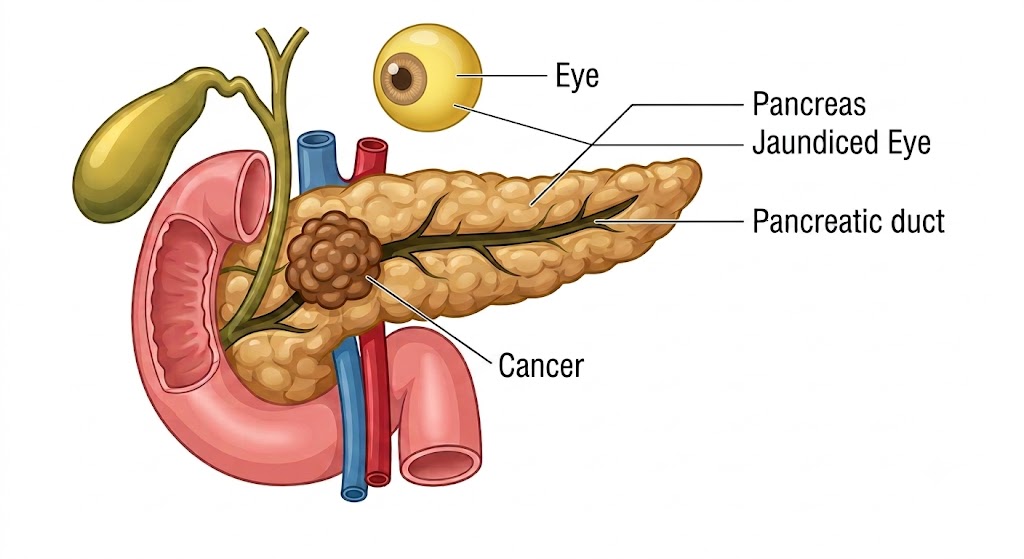
Yes, jaundice can be a sign of pancreatic cancer and it’s one of the more actionable ones. When a tumour grows in the head of the pancreas, it blocks the common bile duct, bile backs up into the bloodstream, and the skin and whites of the eyes turn yellow. Dark urine and pale stools follow. Jaundice from pancreatic cancer is typically painless at first, which is actually what makes it more concerning than jaundice from gallstones, which tends to come with abdominal pain. Painless obstructive jaundice in someone over 45 needs urgent imaging.
According to Dr. Sandeep Nayak,who provides Best cancer treatment in Bangalore, “Jaundice from a pancreatic head tumour is both a symptom and a clock. The duct is blocked, bilirubin is rising, and the tumour has been there long enough to obstruct a major structure. That’s not an early disease. But it’s still potentially resectable disease in a proportion of patients if investigation happens immediately rather than after weeks of treating presumed hepatitis.”
Yellow skin or eyes, dark urine, pale stools and no obvious cause? That combination needs a CT scan, not a course of antibiotics
How Does Pancreatic Cancer Cause Jaundice?
The anatomy explains it. Not every pancreatic tumour causes jaundice. Where it sits in the pancreas determines whether the bile duct gets blocked.
- Head of Pancreas Tumours:
The common bile duct runs through the head of the pancreas before entering the small intestine. A tumour here compresses or invades the duct early. Bile can’t drain. Bilirubin accumulates in the blood. Yellow skin appears. This is why pancreatic head cancers often get caught slightly earlier than body or tail cancers. They announce themselves. - Body and Tail Tumours:
Cancers in the body or tail of the pancreas are nowhere near the bile duct. They cause no jaundice. Back pain, weight loss, and new diabetes are the signals there. Without jaundice to investigate, these patients often present far later with larger tumours and worse outcomes than head cancers. - What the Jaundice Looks Like:
Painless yellowing of the skin and eyes. Urine turns dark tea-coloured from bilirubin spilling into it. Stools become pale clay-coloured because bile stops reaching the gut. Itching from bile salts under the skin is common and often severe. No fever unless the blocked duct gets infected, which is a separate emergency. - Jaundice Isn’t Always Cancer:
Gallstones block the bile duct more commonly than cancer does. Hepatitis causes jaundice through a different mechanism. Bile duct strictures, cholangiocarcinoma, and ampullary cancer are other possibilities. But painless obstructive jaundice with a dilated bile duct on ultrasound and no stones needs CT pancreas immediately. That combination is pancreatic head cancer until imaging proves otherwise.
Pancreas Bile Duct Tumors page covers what investigation and surgical options look like once obstructive jaundice has been confirmed to have a pancreatic or biliary origin.
What Happens After Jaundice Is Investigated?
Getting the jaundice diagnosis right is step one. What follows determines whether the patient has a chance at cure.
- CT Pancreas Protocol:
A triple-phase CT abdomen and pelvis with pancreatic protocol is the standard first investigation. It shows the tumour, its relationship to blood vessels, and whether it looks resectable before anyone mentions surgery. A dilated bile duct on ultrasound with no stones leads directly here. Not ERCP first. Not biopsy first. CT first. - Biliary Drainage Before Surgery:
When bilirubin is very high, bile duct stenting via ERCP relieves the obstruction before surgery is planned. High bilirubin increases surgical risk. Draining the duct first lets the liver recover. This is a preparation step, not a treatment. The tumour is still there. Surgery follows. - Resectability Assessment:
A tumour in the pancreatic head is assessed for vascular involvement. Contact with the superior mesenteric artery or portal vein determines whether Whipple surgery is possible. Borderline resectable tumours go to neoadjuvant chemotherapy first to try to shrink away from the vessels before surgery is attempted. - When Resection Isn’t Possible:
Locally advanced or metastatic disease means surgery isn’t curative. ERCP stenting keeps the bile duct open permanently. Systemic chemotherapy with FOLFIRINOX or gemcitabine-nab-paclitaxel addresses the cancer. The goal shifts from cure to disease control and quality of life.
Our previous blog on Warning Signs Pancreatic Cancer is worth a read for understanding the full picture of symptoms that should trigger pancreatic investigation, not just jaundice but the combination that together raises the alarm.
Why Choose MACS Clinic for Pancreatic Cancer with Jaundice?
Dr. Sandeep Nayak’s team at MACS Clinic moves fast when pancreatic cancer is confirmed. CT staging same week. Resectability assessed before the window narrows. Borderline cases go straight to neoadjuvant chemotherapy planning not a waiting list. And when the tumour is resectable, Whipple or distal pancreatectomy is performed laparoscopically, with the same oncological clearance as open surgery and significantly less recovery time.
Pancreatic cancer is curable in the patients who get to surgery. The ones who get to surgery are the ones whose workup happened quickly enough. Those who want to discuss their situation can reach the team at +91 8035740000.
FAQs
Is jaundice always a sign of pancreatic cancer?
No. Gallstones are a far more common cause. But painless jaundice with dark urine, pale stools, and a dilated bile duct on ultrasound without stones needs CT pancreas urgently.
Why is pancreatic cancer jaundice painless?
The tumour blocks the duct gradually without the sudden spasm that gallstones cause. Painless progressive jaundice is actually more suspicious for malignancy than the colicky pain of stone-related obstruction.
Can jaundice from pancreatic cancer be treated?
The jaundice itself is relieved by biliary stenting. The cancer causing it is treated with surgery if resectable, or chemotherapy for advanced disease. Stenting keeps the bile duct open when surgery isn’t an option.
How quickly should jaundice be investigated?
Within days, not weeks. Painless jaundice in someone over 45 needs ultrasound immediately and CT pancreas if the bile duct is dilated. Delay in investigation reduces the chance of catching a resectable tumour.
Disclaimer: This content is published for educational and informational purposes only.