

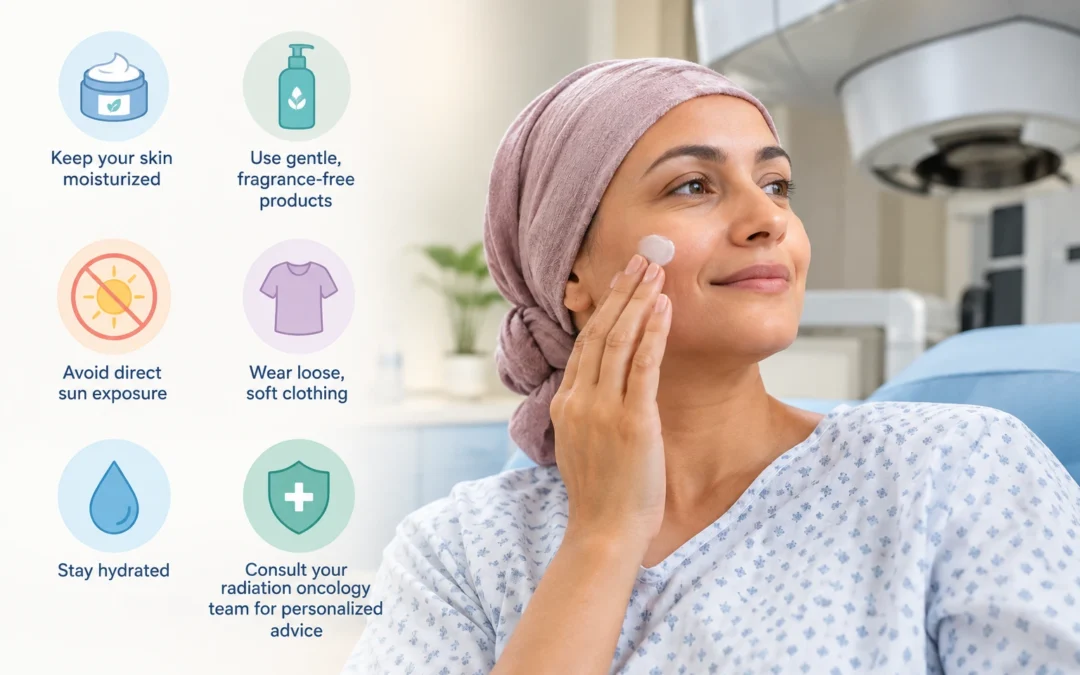
To look after your skin during radiation therapy, keep the treated area clean, gently moisturised and protected from friction, harsh products and sun. In practice that means washing with lukewarm water, patting dry, using only products your radiation team has approved, wearing loose clothing and keeping the area out of the sun. Most people get some redness or dryness, and it usually settles a few weeks after treatment ends.
According to Dr. Sandeep Nayak, who provides cancer treatment in Bangalore, says skin reactions are what patients worry about most, because they can see them. “Most are mild and they settle after treatment, and good habits keep them milder. The rule I give is simple. Nothing goes on the skin that your radiation team hasn’t approved, nothing rubs, and nothing gets hot or sunburnt. And if the skin breaks, blisters or starts to weep, don’t wait. Call the same day, because that’s when we can help most.”
Learn how to manage skin reactions during radiation therapy and recognize when to seek medical advice from your oncology team.
Skin Care During Radiation Therapy The Daily Routine?
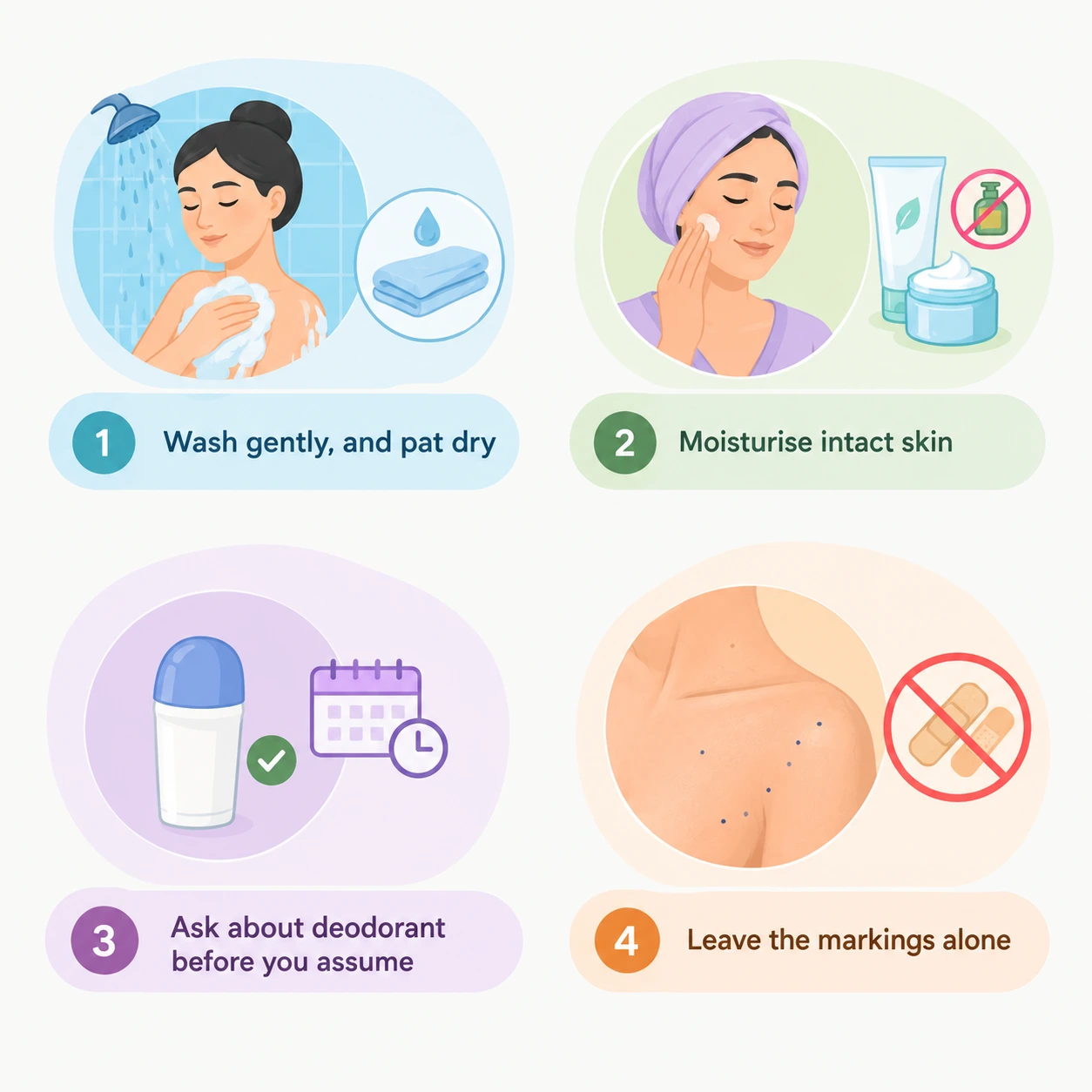
You don’t need a long routine. These are the basics:
- Wash gently, and pat dry. Use lukewarm water, and a mild unscented soap if you like. Don’t scrub, and don’t rub with the towel. Dry the creases well, such as under the arm, under the breast or in the groin.
- Moisturise intact skin. Use a fragrance-free cream your team recommends, and not right before your session. Some people are given a mild steroid cream such as mometasone to calm itching and redness, mostly for breast and head and neck treatment. Don’t start one on your own.
- Ask about deodorant before you assume. Many centres now allow it with breast radiation as long as the skin is unbroken, but not within about two hours of treatment on that side. Check with your team first.
- Leave the markings alone. Don’t scrub off the ink marks or tattoo dots that guide the treatment, and avoid sticking tape, plasters or other adhesives on the area. Our radiation therapy page explains how the planning works.
Radiation Treatment Skin Reactions :What’s Normal and When to Call?
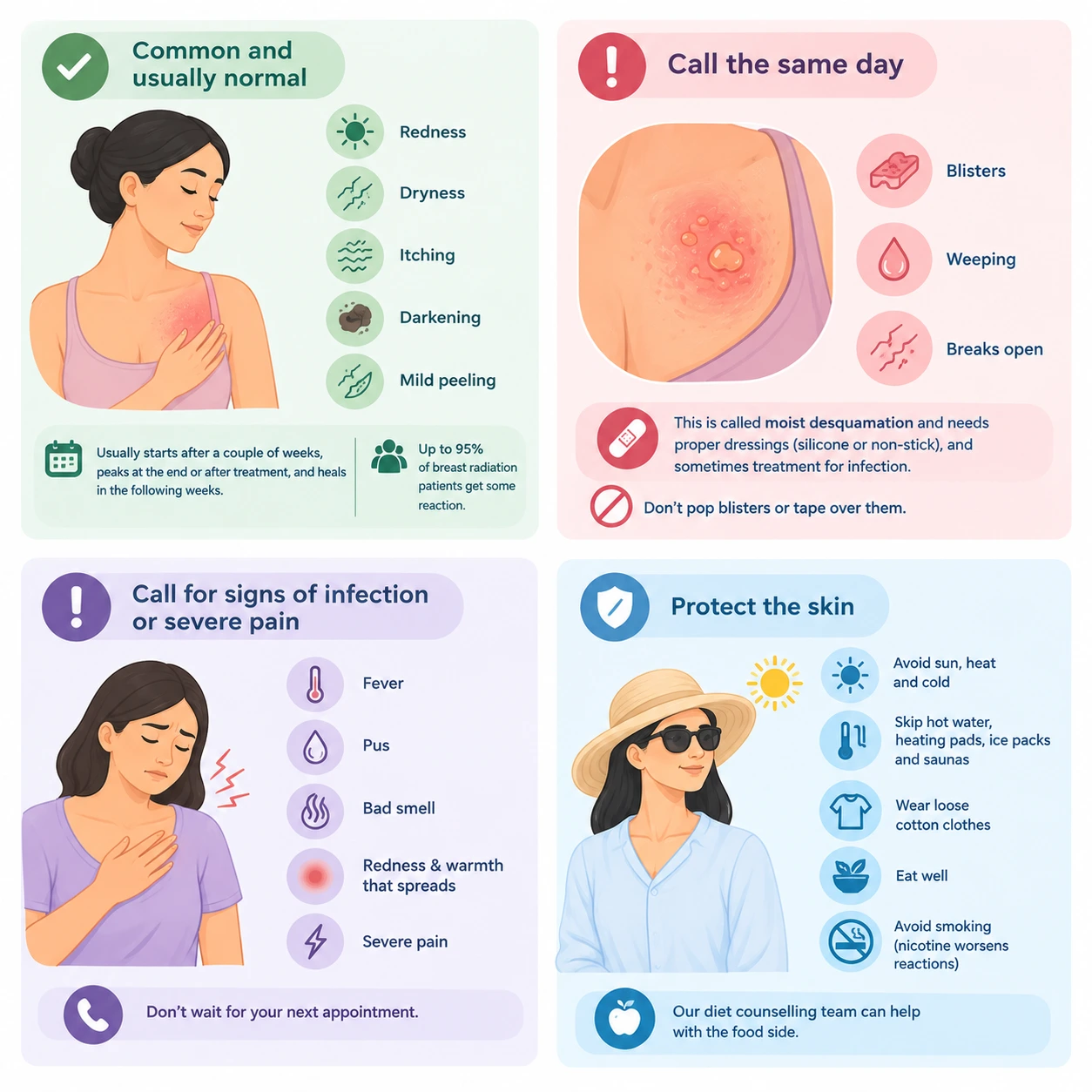
It helps to know what counts as normal, and what doesn’t:
- Redness, dryness, itching and darkening are normal. The skin can look like mild sunburn, and it may peel a little, which is called dry desquamation. It usually starts after a couple of weeks, peaks around the end of treatment or a week or two after, and heals over the following weeks. Up to 95% of people having breast radiation get some reaction.
- Call the same day if the skin blisters, weeps or breaks open. That’s called moist desquamation, and it needs proper dressings, usually silicone or non-stick ones, and sometimes treatment for infection. Don’t pop blisters or tape over them.
- Also call for signs of infection or severe pain. Fever, pus, a bad smell, or redness and warmth that keep spreading are all reasons not to wait for your next appointment.
- Protect the skin from the sun, heat and cold. Cover the area, avoid hot water, heating pads, ice packs and saunas, and wear loose cotton clothes. Eating well and not smoking
What Determines the Right Skin Care During Radiation Therapy?
Skin care isn’t identical for everyone. A few things decide what your team recommends:
- The area being treated. Breast, head and neck and skin folds such as the underarm or groin react more, and they’re where steroid creams and extra care are most often used.
- The dose and the technique. Higher doses cause stronger reactions, and newer techniques such as IMRT tend to lower how often and how badly they happen.
- What else you’re having. Some chemotherapy and targeted drugs make the skin more sensitive to radiation, so your team plans around them.
- Your own skin and health. Fair skin, diabetes, smoking, extra weight and earlier sun damage can all make reactions worse.
- How your skin is doing week to week. It’s checked regularly, and the plan changes if it needs a steroid cream, a dressing or a break from treatment.
Key Takeaways
- Skin care during radiation therapy means gentle washing, a fragrance-free moisturiser on intact skin, and protecting the area from sun, heat, friction and adhesives.
- Redness, dryness, itching and mild peeling are normal, and they usually settle a few weeks after treatment ends.
- Blistering, weeping or broken skin, signs of infection or severe pain need a call to your team the same day.
- Use only products your radiation team has approved, and don’t scrub off the treatment markings.
- For questions about your own situation, you can contact the clinic at +91 9482202240.
FAQs
Can I use my usual moisturiser or deodorant during radiation therapy?
Ask first. Fragrance-free creams are usually fine, though not right before a session. Many centres allow deodorant with breast radiation if the skin isn’t broken, but not within a couple of hours of treatment. Your team will tell you what’s okay for your own treatment area.
How long do radiation skin reactions last?
They usually build over the weeks of treatment, peak near the end or a week or two after, and settle over the following few weeks. Some darkening or dryness can last longer. Keep up your skin care for a couple of weeks after your last session.
Can I go out in the sun or swim during radiation therapy?
Keep the treated area covered and out of direct sun, and keep doing that after treatment, because the skin stays sensitive. Chlorine in pools can irritate it, so check with your team before swimming, and shower and moisturise afterwards if they say it’s okay.
What should I do if my skin starts to blister or peel?
A little dry peeling is common and not a worry. Blisters, weeping or open skin are different, so call your team the same day. Don’t pop blisters or stick tape on them. They’ll tell you which dressing to use.
References
- MASCC Skin Toxicity Study Group: Clinical Practice Guidelines for the Prevention and Treatment of Acute and Late Radiation Reactions, Oncology Nursing Society
- MASCC Clinical Practice Statement: Prevention and Management of Acute Radiation Dermatitis Using Topical Corticosteroids, Guideline Central
- Summary of Recommendations for Radiation Dermatitis Evaluation and Treatment, Breast Cancer: Targets and Therapy, PubMed Central
Disclaimer
This content is published for educational and informational purposes only and is not a substitute for medical advice. Please speak to your oncologist before changing or stopping any treatment.