

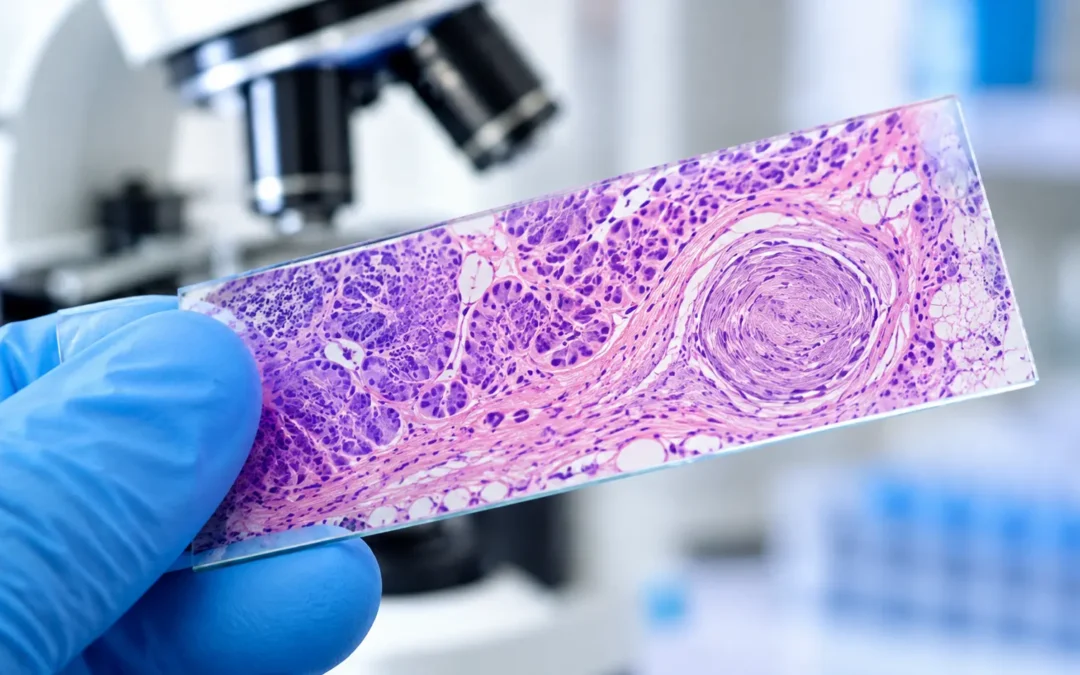
It means cancer cells have been found growing around, along or inside the covering of a nerve, seen under the microscope after a biopsy or surgery. Nerves act like small tracks through the tissue, and tumour cells can follow them. PNI is a finding on the pathology report, not a symptom you feel, and it is often linked with a higher chance that the cancer returns locally. It tells the team something about how the tumour behaves, which is why it gets noted carefully.
Dr. Sandeep Nayak, who provides the Best Cancer Treatment in Bangalore, says patients are often alarmed when they see it in a report. “People read the term and assume the worst. PNI does tell us the tumour behaves a little more aggressively, so we may widen the plan, add radiation or chemotherapy. It is one piece of information. It is not a verdict, and it doesn’t mean the cancer has spread everywhere.”
Found perineural invasion in your own pathology report and want it explained?
Perineural Invasion Meaning: What Does It Change?

The perineural invasion meaning is practical. Cancer that travels along nerves can reach beyond the area the surgeon removed, so margins and follow-up matter more. Here is what it can affect.
- Risk of local recurrence. Tumour cells on a nerve can be left behind at the edge, so the chance of the cancer returning near the original site is higher.
- Surgical margins. The surgeon may aim for wider clearance around the tumour and check the edges closely.
- Pain. Because nerves are involved, some people have pain, though many have none.
- Need for extra treatment. It can tip the balance towards radiation or chemotherapy after surgery.
- Where it is reported. It is commonly seen in pancreatic, head and neck, prostate, colorectal, bile duct and some skin cancers.
- How it is read. It is reported as present or absent, sometimes with how extensive it is, and weighed with size, grade and margins. Our blog on cancer staging explains how these findings combine.
How Is PNI in Cancer Found and Managed?

PNI in cancer is found only by a pathologist examining tissue, so it cannot be seen on a scan. These are the main steps.
- Biopsy. It may be spotted on a biopsy sample, though a small piece can miss it.
- Surgical specimen. The whole removed tumour gives a fuller and more reliable answer.
- Wider surgery. If it is known beforehand, the surgeon may plan generous margins.
- Radiation to the area. Local radiation can treat cells that may remain along nerves. Our blog on radiation therapy vs surgery for early-stage cancer explains how local treatments are chosen.
- Chemotherapy. In some cancers PNI is one factor used to decide whether drug treatment follows surgery.
What Determines the Right Treatment Approach for Perineural Invasion?
The team looks at several things together before recommending anything.
- The cancer type. PNI matters differently in different cancers.
- Stage, grade and margins. It is one finding among several.
- Lymph node status. This helps guide whether chemotherapy is advised.
- Tumor location. Tumours near large nerves or vital structures limit how wide surgery can go.
- Molecular testing. Precision oncology results may refine the plan.
- Your health and preferences. They shape how much extra treatment is sensible.
FAQs
Does PNI mean the cancer has spread?
Not necessarily. It means local spread along nerves, which is different from spread to distant organs.
Does it cause pain?
Sometimes, depending on the nerve involved. Many people feel nothing.
Can PNI be treated?
It is managed through the overall cancer treatment plan, such as surgery, radiation or chemotherapy.
Should I ask for a second opinion?
It is reasonable if the report is unclear or you are unsure about the plan.
Disclaimer
This content is published for educational and informational purposes only.
References:
1. Perineural invasion in prostate cancer – PubMed research
2. Perineural invasion in head and neck cancer – PubMed research