

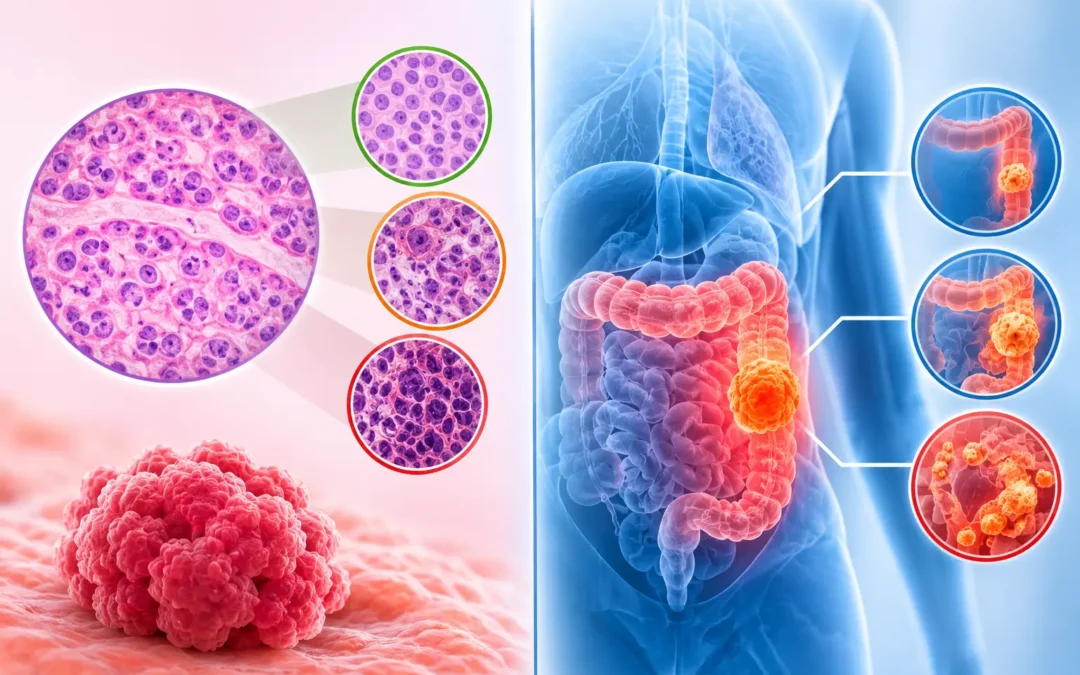
Grade is about how the cancer cells look, and stage is about where the cancer is. Tumour grade describes how abnormal the cells appear under a microscope compared with healthy ones, which hints at how fast the cancer is likely to grow. Cancer stage describes how large the primary tumour is and how far the disease has spread in the body. Both turn up on the same pathology and scan reports, and they are easy to mix up, since each comes with a number. So how do the two fit together, and which one matters more for your treatment? Neither does the job alone, and the plan is usually built from both.
Dr. Sandeep Nayak, who provides the Best Cancer Treatment in Bangalore, sees patients mix them up all the time. “Someone hears grade 3 and assumes it means stage 3, or hears stage 1 and relaxes without asking about the grade. They are two different questions. Stage tells us where the cancer has got to. Grade tells us how it is likely to behave. A small tumour with aggressive looking cells can need more treatment than its size suggests, and a large, slow tumour can be less urgent than it looks. We need both answers before we choose a plan.”
Looking at a pathology report and not sure what the numbers mean?
Tumour Grade vs Cancer Stage: How Do They Compare?
The two sit side by side in a report but measure completely different things.
| Tumour grade | Cancer stage | |
| What it describes | How abnormal the cells look and how fast they seem to be growing | Size of the tumour, whether lymph nodes are involved and whether it has spread to other organs |
| How it is worked out | The pathologist examines tissue from a biopsy or operation under a microscope | Scans, examination, blood tests and surgical findings, combined using the TNM system |
| Usual scale | Grade 1 (cells look close to normal) up to grade 3 or 4 (cells look very abnormal), or a cancer specific score such as Gleason for the prostate | Stage 0 to stage IV, with I the most limited and IV the most widespread |
| What it mostly tells you | How aggressive the cancer is likely to be | How far the cancer has travelled and how much of the body is involved |
| Can it change? | It can differ between a small biopsy and the full tumour, because only part of the tumour is sampled | The stage given at diagnosis stays on record even if the cancer later progresses |
| Who decides | Mostly the pathologist | The oncology team, using imaging and pathology together, as covered in our post on how staging is done before surgery |
Neither one is a prediction of how long someone will live. They are inputs, along with the type of cancer, its biology and the patient’s own health.
How Do Tumor Grade and Cancer Stage Work Together?
It helps to look at each one first. What is tumour grade in practice? It is a pathologist’s read of how far the cells have drifted from normal. And what is cancer staging? It is a map of where the disease has reached. Together they explain a few situations that otherwise seem confusing.
- A small tumour can still be high grade. A stage I cancer with aggressive looking cells may be advised additional treatment after surgery, because its behaviour is not as gentle as its size suggests.
- A large tumour can still be low grade. A slow growing cancer can be big, and sometimes advanced, yet behave more gradually, which affects how urgently and how intensively it is treated.
- Grade is not stage. A grade 3 tumour is not a stage 3 cancer, and a high grade cancer is not automatically stage 4. Our post on what a stage 4 diagnosis actually means shows how much variety hides inside a single stage.
- Neither is the whole picture. Hormone receptors, HER2 status and gene changes in the tumour are increasingly part of the decision, which is the territory of precision oncology.
What Determines the Right Treatment Approach?
Grade and stage feed into the plan, and so do a few other things.
- The type of cancer. Each cancer has its own grading system, such as the Gleason score for prostate cancer or the Nottingham grade for breast cancer, and its own staging rules, so the same number does not mean the same thing across cancers.
- The stage. It decides first whether the aim is cure or control, and whether surgery, radiation or drug treatment leads.
- The grade. A higher grade may push the team toward more treatment after surgery, or closer follow up.
- Biomarkers and molecular findings. These can point to targeted therapy or show that some treatment can safely be skipped.
- The patient’s health and priorities. Age, other illnesses and personal goals shape what is realistic and what is wanted.
- A joint review. At MACS Clinic the pathology, imaging and treatment options are reviewed together, and anyone who wants another view can read our post on what a second opinion in cancer involves.
Key Takeaway
- Tumour grade is about how the cancer cells look under a microscope. Cancer stage is about the size of the tumour and how far it has spread.
- They are different measures, and a high grade is not the same as a high stage.
- Doctors use both, along with the cancer type and its biology, to choose treatment.
- For questions about your own report, you can contact the clinic at +91 9482202240.
FAQs
Which matters more, tumour grade or cancer stage?
Neither on its own. Stage usually shapes the broad plan, such as whether surgery comes first, while grade helps judge how aggressive the cancer is and how much treatment is needed. For some cancers one carries more weight than the other, so it depends on the type.
Does a high grade mean the cancer is stage 4?
No. Grade and stage are separate. A high grade cancer can be found very early and be fully curable, and a low grade cancer can be advanced.
Can the grade change after surgery?
It can look different. A biopsy only samples part of a tumour, so the grade on the full specimen after surgery may be higher or lower than the first report suggested.
Do all cancers have a grade?
Most solid tumours do, though the scoring system differs between cancers. Blood cancers such as leukaemia are classified in other ways, so a grade in the usual sense does not apply to them.
Disclaimer
This content is published for educational and informational purposes only.
References: