

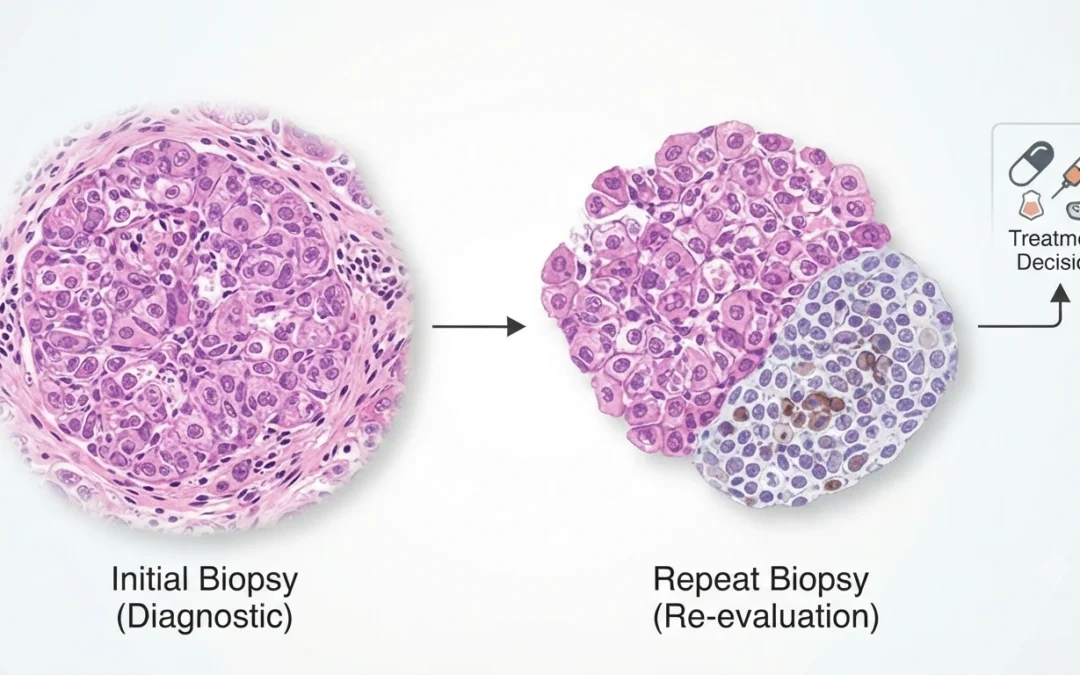
A repeat biopsy is needed when the first sample doesn’t give the whole answer. Maybe it was too small or unclear. Maybe the result doesn’t match the scans. Or maybe the cancer has changed since it was first tested, which can happen when cancer comes back or stops responding. Treatment is chosen according to what the biopsy shows, so deciding on old or incomplete information risks picking a drug that won’t work well. That doesn’t mean the first biopsy was wrong, or that things are worse. Often it just means the team needs more tissue to test properly, or a fresh look at what the cancer is doing now.
Dr. Sandeep Nayak, who provides cancer treatment in Bangalore, says the reason is almost always practical. “Modern treatment depends on tests done on the tumour tissue, not just on what the scan shows. If the first sample is too small for those tests, we need another. And a cancer that has come back can behave differently from the original, so a fresh sample can change the choice of drug. Ask what the repeat biopsy is meant to answer, and whether an existing sample or a blood test could do the job instead.”
If you’ve been asked to have another biopsy and aren’t sure why, it’s fair to ask what question it’s meant to answer.
Share your reports with our team, and they’ll explain what the results so far mean and whether another sample is likely to change your plan.
Why Repeat Biopsy Is Needed: Common Reasons

- Not enough tissue. A small sample may not be enough to name the exact type of cancer or to run the marker tests that decide treatment. In one large study of lung biopsies, about 3 in 10 repeat biopsies were done because the first sample was inadequate. Those markers are what precision oncology relies on.
- The result and the scans disagree. If the report doesn’t fit what the imaging shows, or the sample came from a part of the lump that wasn’t the cancer, another sample may be needed.
- The cancer has changed. After a recurrence, hormone and HER2 receptors can switch, and in one study of women with relapsed breast cancer, such switches changed the treatment plan for about one in six. You can read more on our breast cancer treatment page.
- A fresh look at the diagnosis. Sometimes an unusual finding calls for a second sample, or for the first one to be reviewed by a pathologist who deals with that type of cancer.
Second Biopsy for Cancer: What to Expect

- It’s usually done with a needle, guided by ultrasound or CT, under local anaesthetic. It may come from a different place than the first one, such as a new or growing lump.
- It carries the same small risks as any biopsy: bleeding, infection and soreness. A lung biopsy can occasionally cause a collapsed lung, so the team weighs that before offering it.
- Sometimes there’s an alternative. The lab may be able to run more tests on tissue it already has, or a blood test for tumour DNA (a liquid biopsy) may help. Tissue is still the better source for some tests, so it isn’t always a substitute.
- Results are usually discussed by the whole team before a plan is made, as our post on the tumour board shows. In EGFR-positive lung cancer, a repeat biopsy at progression is how doctors look for resistance, as described in our blog on EGFR-positive lung cancer.
What Decides Whether You Need a Repeat Biopsy?
It isn’t automatic, and a few things decide it.
- Whether the first sample was large and clear enough to give a firm diagnosis.
- Which tests your treatment depends on, such as hormone receptors, HER2, EGFR or other markers.
- Whether the cancer has come back or is no longer responding to treatment.
- Whether the scans and the report agree with each other.
- Whether there’s a safe, reachable place to take a sample.
- Whether an existing sample or a blood test can answer the question instead.
- Your overall health, and how likely the result is to change your treatment.
Key Takeaways
- A repeat biopsy is done to give the team better information, usually because the first sample was too small, unclear, or out of date.
- It doesn’t mean the first result was wrong, or that the cancer has got worse.
- Cancers can change over time, and the markers that guide treatment can switch.
- It’s reasonable to ask what the biopsy is for, and whether a blood test or an existing sample could do the job.
- Questions about your own reports? You can call the clinic on +91 9482202240.
FAQs
Why is a repeat biopsy needed before cancer treatment?
Usually because the first sample was too small or unclear, the result doesn’t match the scans, or the cancer may have changed. Treatment depends on the biopsy, so the team wants it to be accurate and up to date.
Does a repeat biopsy mean the first one was wrong?
Not necessarily. Often the first sample was correct but not big enough for every test. Sometimes the cancer has changed since, and a new sample shows what it is doing now.
Can a cancer’s biology change over time?
Yes. After a recurrence, markers such as hormone receptors or HER2 can differ from the original tumour. In one study, such switches changed treatment for about one in six women with relapsed breast cancer.
Is there an alternative to a second biopsy for cancer?
Sometimes. The lab may be able to test leftover tissue, or a blood test for tumour DNA may help. Tissue is still the best source for some tests, so your team will advise.
Disclaimer
This content is published for educational and informational purposes only and is not a substitute for medical advice. Whether a repeat biopsy is needed depends on your individual case, so please discuss it with your oncologist.
References:
1. Transthoracic Needle Biopsy of Pulmonary Lesions, PubMed Central