

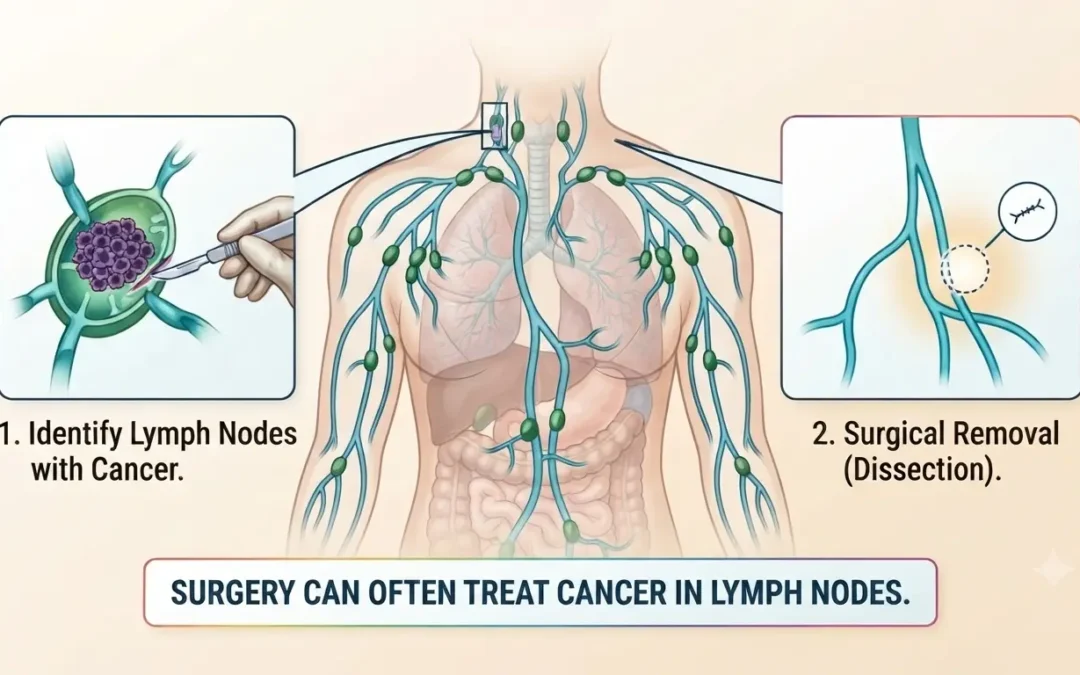
Often, yes. When cancer has spread to nearby lymph nodes, one of the standard treatments is to remove them. Doctors call this a lymphadenectomy, or lymph node dissection, and it’s usually done at the same time as taking out the main tumour. The idea is to clear the nodes that hold cancer, so it can’t go on spreading along the same route. In some cancers this is a core part of the operation, such as oral cancers, breast cancer with involved nodes, and many bowel and stomach cancers. But it isn’t the answer to every lymph node problem. In lymphoma, a cancer that starts in the nodes themselves, drugs and radiation do most of the work. And in a few situations, such as melanoma with only a tiny spot of cancer in the first node, trials found that taking out all the other nodes didn’t help people live longer, and it carried a real risk of limb swelling. So the honest answer is yes, but it depends on which cancer and how far it has gone.
Dr. Sandeep Nayak, who provides cancer treatment in Bangalore, says the type of dissection matters. “There’s a difference between checking nodes and clearing them. A sentinel biopsy removes only the first few nodes to see whether cancer has spread. A therapeutic dissection clears the nodes in that area because we know they contain cancer. For some cancers, that gives the best control. For others, we now know that removing every node doesn’t improve survival and adds side effects, so we watch carefully instead. That’s why the team looks at the cancer type, how many nodes are involved and how they look on scans before recommending one.”
If you’ve been told cancer has reached your lymph nodes, it helps to understand whether removing them is meant to treat, to stage, or both.
Share your scans and reports with our team, and they’ll explain what the options are and what each involves.
Lymph Node Cancer Surgery: How It Works

- There are different kinds of operation. A sentinel biopsy takes only the first few nodes to check for spread. A therapeutic dissection clears the nodes in an area because they’re known to contain cancer. And an elective dissection removes nodes that look normal when the risk of hidden cancer is high.
- It’s usually done together with the main operation. In breast cancer that means the armpit, in melanoma the armpit, groin or neck, and in oral cancer the neck. You can read about the head and neck side on our oral cancer treatment page.
- In bowel, stomach and pelvic cancers, the lymph nodes near the organ are removed along with it as a standard part of the operation, as on our colon cancer treatment page.
- A pathologist then counts how many nodes contain cancer. That number helps decide what treatment comes next.
Lymphadenectomy for Cancer: Benefits, Risks and Alternatives

- The benefit is better control in that area and a more accurate picture of the stage. Whether it also helps survival depends on the cancer. In melanoma, a large trial found that removing the remaining nodes after a positive sentinel node improved control of the disease in that area, but not survival.
- The risks are real. Swelling of the limb (lymphoedema), numbness, fluid collecting under the wound and wound problems are the main ones, and after neck surgery, shoulder weakness can occur. In that melanoma trial, lymphoedema affected about 24 in 100 people after immediate dissection, against about 6 in 100 with observation. Our blog on sentinel node biopsy vs full lymph node removal explains how the risk compares.
- There are alternatives for some cancers. In melanoma, careful watching with regular ultrasound scans gave similar survival, and in some other cancers radiation to the nodal area can be used instead of an operation.
- The choice is usually made by a team. Our post on the tumour board shows how that works.
What Decides Whether Lymph Nodes Should Be Removed?
It isn’t one rule, and a few things matter together.
- The type of cancer. Some cancers do better with nodes cleared, while others show no survival gain.
- Whether the nodes are proven to contain cancer or only suspected, on scans or a biopsy.
- How many nodes are involved and how they look on imaging.
- What other treatment will be given. Radiation, chemotherapy or immunotherapy can also deal with cancer in nodes.
- Where the nodes are. Groin dissection carries a higher risk of lymphoedema than armpit dissection.
- Your own health, and what you’re comfortable with once the risks and alternatives have been explained.
Key Takeaways
- Yes, surgery can treat cancer in lymph nodes, and removing them is often done with the main tumour.
- It isn’t right for every cancer. Lymphoma is mainly treated with drugs and radiation, and in melanoma, removing all the remaining nodes didn’t improve survival.
- Side effects such as limb swelling are real, so the decision weighs benefit against risk.
- A team usually decides, after looking at the cancer type, the number of nodes and your scans.
- Questions about your own case? You can call the clinic on +91 9482202240.
FAQs
Can surgery treat cancer in lymph nodes?
Often, yes. Removing the affected nodes, called a lymphadenectomy or lymph node dissection, is a standard treatment in many cancers, and it’s usually done at the same time as removing the main tumour.
What is a lymphadenectomy?
It’s an operation to remove the lymph nodes in one area, also called lymph node dissection. A biopsy takes only a few nodes to test them. A dissection clears the whole group.
Does removing lymph nodes improve survival?
It depends on the cancer. In some, clearing involved nodes is a core part of treatment. In melanoma, trials found that removing all remaining nodes after a positive sentinel node improved control in the area but not survival.
What are the risks of lymph node dissection surgery?
Swelling of the limb, numbness, fluid under the wound, wound problems and, in the neck, shoulder weakness. The risk depends on where the nodes are and how many are removed.
Disclaimer
This content is published for educational and informational purposes only and is not a substitute for medical advice. Whether lymph node surgery is right for you depends on your cancer and your individual case, so please consult your surgeon and oncologist.
References:
2. Lymph Node Dissection for Melanoma: Where Do We Stand?, PubMed Central