

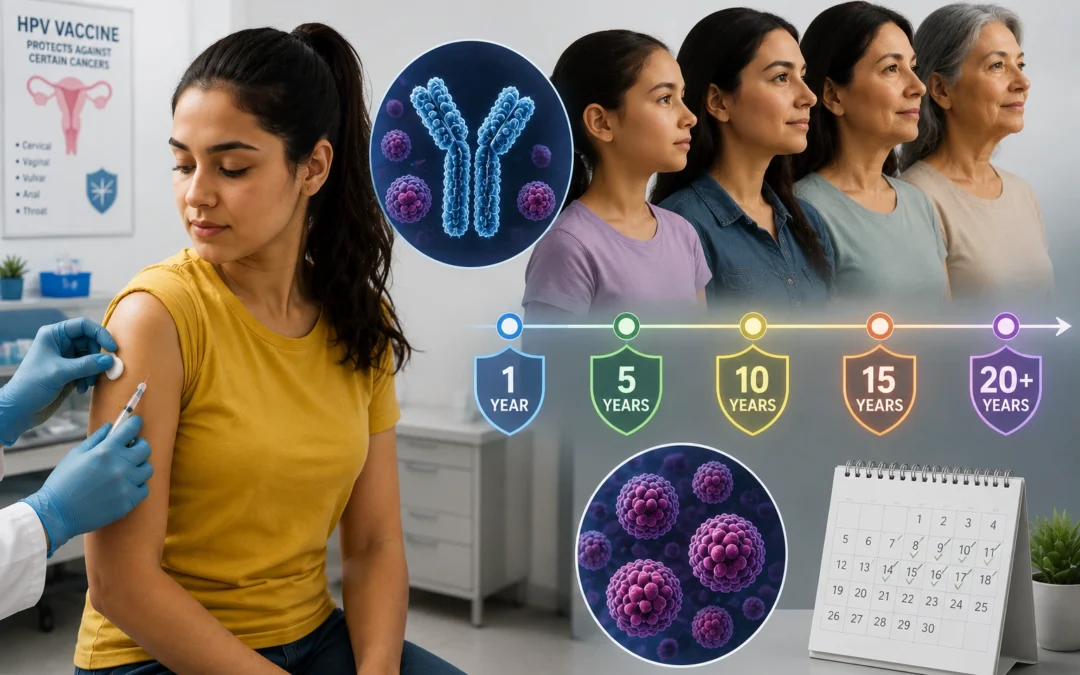
Longer than most people assume, is the short version. The vaccine’s been around long enough now that researchers have been able to follow the same vaccinated groups for well over a decade, and so far nobody’s found a point where the protection starts slipping. Not a gradual fade, not a cliff at year ten, nothing. Which honestly says as much about how young this vaccine still is in research terms as it does about how well it’s holding up.
Dr. Sandeep Nayak, known for the Best Cancer Treatment in Bangalore, gets asked about this constantly by parents bringing in teenagers for the shot. His answer tends to surprise them. “They expect me to say it’s like tetanus, needs a booster every ten years or so. Right now I can’t tell them that, because the data just hasn’t shown any drop-off. It’s honestly one of the more reassuring things I get to say in a day full of conversations that usually aren’t.”
Curious whether HPV vaccination still applies to you or your family?
What the Long-Term Data Is Actually Showing?
Some of the earliest people vaccinated back when the shot first rolled out are now well over a decade into follow-up, and researchers still haven’t seen antibody levels drop off in any meaningful way. That’s the headline, but there’s more underneath it worth knowing:
- Long-running follow-up studies show antibody levels holding steady 12 to 15 years out
- Countries with high, sustained vaccination coverage have watched HPV-related cervical cancer rates fall and actually stay down, not creep back up later
- No study to date has found the point where protection starts weakening
- Researchers keep watching anyway, since a vaccine this new can’t fully rule out a booster being needed decades from now
If protection was fading, the studies running right now would be the first to catch it, and so far none of them have.
Why This Actually Changes the Cervical Cancer Picture?
HPV causes most cervical cancer cases, so protection that genuinely holds for over a decade isn’t a footnote, it’s close to the entire point of the vaccine existing:
- Most HPV-related cancers take years, sometimes decades, to develop after the original infection
- Durable immunity keeps that entire risk window shut rather than just delaying it a bit
- People vaccinated as teenagers when the rollout started are now hitting the age range where cervical cancer risk normally climbs
- The reassuring long-term data is coming directly from that group, not from projections
One thing worth being upfront about: vaccination doesn’t cover every HPV strain linked to cervical cancer, so screening still matters even for someone who got the shot years ago. It’s not a replacement, it’s a layer that works alongside screening, not instead of it.
Why Choose MACS Clinic for HPV and Cervical Cancer Care?
Dr. Sandeep Nayak’s team looks at vaccination history, screening records, and personal risk together, rather than treating each one as a separate box to check off. For families, that often means one conversation covers whether a teenager still needs the vaccine, whether an adult missed their window, and what screening should look like going forward, instead of three separate visits for three separate questions. It’s part of a wider approach to cancer prevention that doesn’t stop once one intervention is done, because vaccination, screening, and follow-up only really work when they’re looked at together.
Have questions about HPV vaccination for yourself or your family? Reach the team at +91 9482202240.
FAQs
Will I eventually need a booster shot?
Nothing in the current evidence points that way. If that ever changes, it’ll be because long-term studies find something, not because anyone’s guessing it might happen.
I'm an adult now, is the vaccine still worth getting?
Often, yes, depending on your age and prior exposure. It’s really a conversation to have directly with a doctor rather than something to rule out on your own.
Does it cover every cancer-causing HPV type?
No. It covers the strains responsible for the majority of cases, which is exactly why screening doesn’t stop being necessary just because someone’s vaccinated.
I got vaccinated years ago, do I still need screening?
Yes, still. The vaccine lowers your risk a lot, it doesn’t take screening off the table.
Disclaimer:This content is published for educational and informational purposes only.