
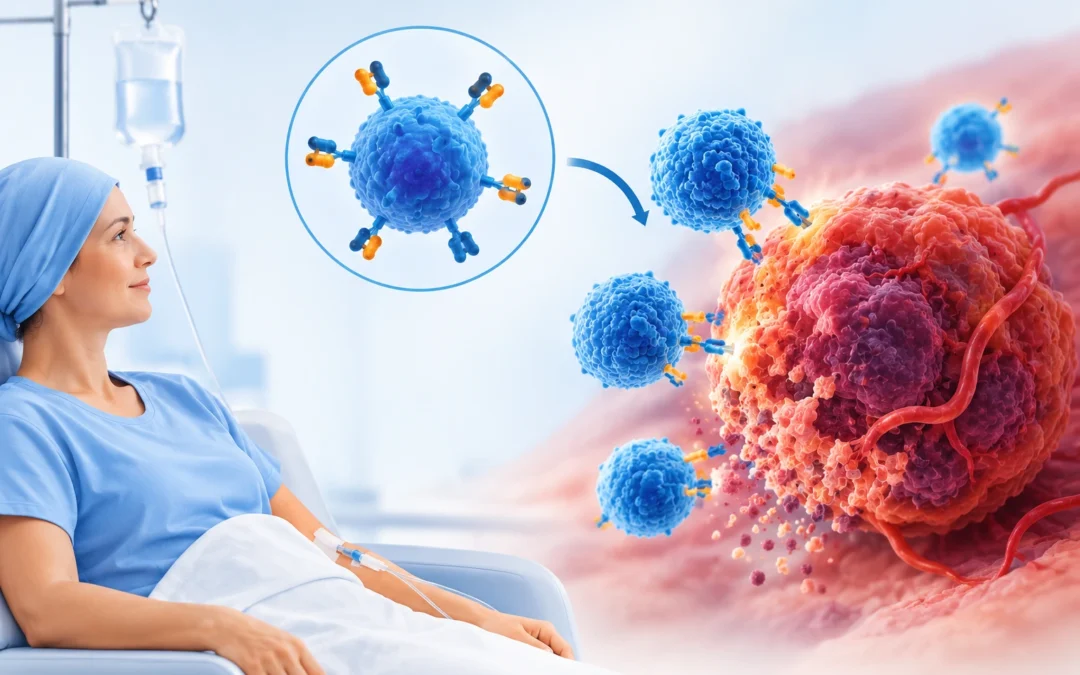
Not widely, no, outside of clinical trials it’s still largely unavailable across most of the world, though something genuinely historic just happened, China approved the first CAR-T therapy for a solid tumor in June 2026. So why has this taken so much longer for solid tumors than it did for blood cancers, where CAR-T’s been used since 2017? Because solid tumors are simply harder targets, they hide behind physical barriers and a hostile immune environment that blood cancers don’t really have, and getting engineered T cells to actually break through has taken years longer than anyone originally hoped.
Dr. Sandeep Nayak, known for the Best Cancer Treatment in Bangalore, has watched this gap between blood cancer and solid tumor CAR-T therapy for years, mostly waiting for exactly this kind of breakthrough. “CAR-T changed leukemia and lymphoma treatment almost a decade ago now. Solid tumors like gastric cancer have resisted the same approach because the tumor’s environment actively suppresses the T cells sent in to fight it. China’s approval for gastric cancer is the first real proof this can be cracked, not a lab result, an actual approved treatment now being given to patients.”
Curious how developments like this might eventually apply to your own care?
What Actually Got Approved and Why It Matters?
The approval itself is narrow, but the underlying achievement is genuinely significant for the field:
- China’s National Medical Products Administration approved satricabtagene autoleucel, known as satri-cel, specifically for CLDN18.2-positive, HER2-negative advanced gastric or gastroesophageal cancer in patients who’ve already failed at least two prior treatment lines
- The Phase 2 trial supporting approval showed meaningfully better outcomes than standard treatment, with median overall survival around 9.5 months compared to 5.5 months for the comparison group
- CLDN18.2 is a protein overexpressed in several gastrointestinal cancers, which is why this specific approach could eventually extend beyond gastric cancer into related cancers sharing the same target
- This remains a China-only approval for now, it hasn’t gone through FDA or other regulatory review elsewhere, and the therapy is priced at roughly 990,000 yuan per infusion, reflecting how expensive and specialized CAR-T manufacturing still is
None of this means CAR-T for solid tumors is broadly available. It means the first real crack in a wall researchers have been pushing against for years has finally appeared.
What This Actually Means Outside China Right Now?
Why Choose MACS Clinic for Access to Emerging Cancer Therapies?
Dr. Sandeep Nayak’s team tracks developments like this closely and factors them into ongoing treatment discussions, particularly for patients with gastrointestinal cancers where new targeted approaches could eventually become relevant. For patients who’ve exhausted standard treatment lines, part of that conversation includes whether an active clinical trial might be a realistic option, not just what’s already approved and available locally. Staying genuinely current on a fast-moving area like cell therapy is treated as an ongoing responsibility, not something revisited only when a patient specifically asks about the latest research.
Want to discuss how emerging treatment options might apply to your own case? Reach the team at +91 9482202240.
FAQs
Can I get this specific CAR-T therapy outside China right now?
Not currently. Satri-cel is approved only in China so far, and accessing it elsewhere would require navigating international treatment options, which comes with real practical and regulatory complications.
Does this approval mean CAR-T will soon be available for other solid tumors too?
Possibly, over time. This approval proves the underlying approach can work, but each cancer type and target still needs its own trials and regulatory approval before becoming available.
How is CAR-T different from other targeted cancer treatments?
CAR-T involves genetically modifying a patient’s own immune cells to recognize and attack cancer cells specifically, rather than using a drug that targets a protein directly from outside the cell.
Is CAR-T therapy for solid tumors risk-free compared to standard treatment?
No, it carries its own specific risks and side effects, and like any new treatment, real-world data on long-term outcomes is still more limited than for established therapies.
References
- AABB: China Approves World’s First CAR T-Cell Therapy for Solid Tumors
- OncLive: China’s NMPA Approves First CAR T-Cell Therapy for CLDN18.2+, HER2- Advanced Gastric/GEJ Adenocarcinoma
- PubMed: First CAR T-Cell Therapy Approved for Solid Tumors
Disclaimer:This content is published for educational and informational purposes only.