
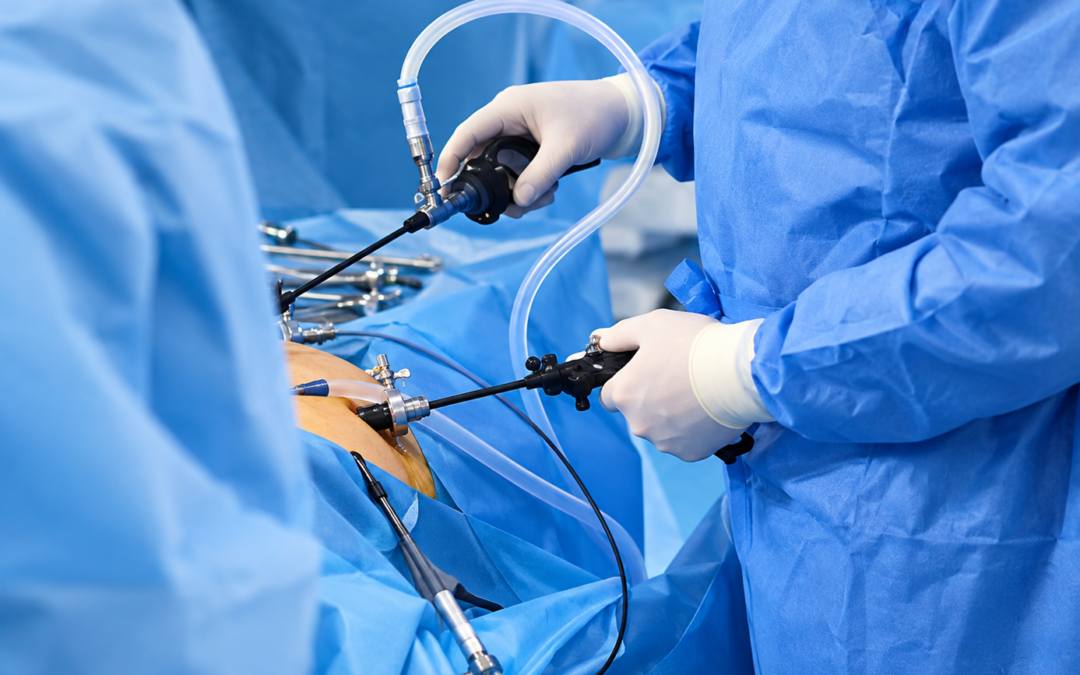
Laparoscopic cancer surgery is a minimally invasive technique where surgeons work through small incisions, usually around 4 to 5 millimeters, using a high definition magnified camera and specialized instruments to remove a tumor and surrounding lymph nodes, rather than cutting the body open along one large incision. So is laparoscopic cancer surgery effective enough to actually trust with something as serious as cancer, or is it just a more comfortable version of the same old operation? The honest answer is yes, for the right cases, it genuinely matches open surgery on cancer outcomes, while asking a lot less of the patient’s body to get there.
Dr. Sandeep Nayak, who provides the Best Cancer Treatment in Bangalore, has watched this technique shift from a novelty to a genuine standard of care over his own career. “People used to assume smaller incisions meant a compromise on how thoroughly the cancer actually gets removed. That’s not what the research shows. Multiple large trials have found laparoscopic cancer surgery is just as effective at removing tumors and lymph nodes as open surgery, cancer for cancer, stage for stage. What changes is everything else, the pain, the recovery time, the scarring. The cancer removal itself holds up.”
Curious whether a laparoscopic approach could apply to your own diagnosis?
How Laparoscopic Cancer Surgery Actually Works?
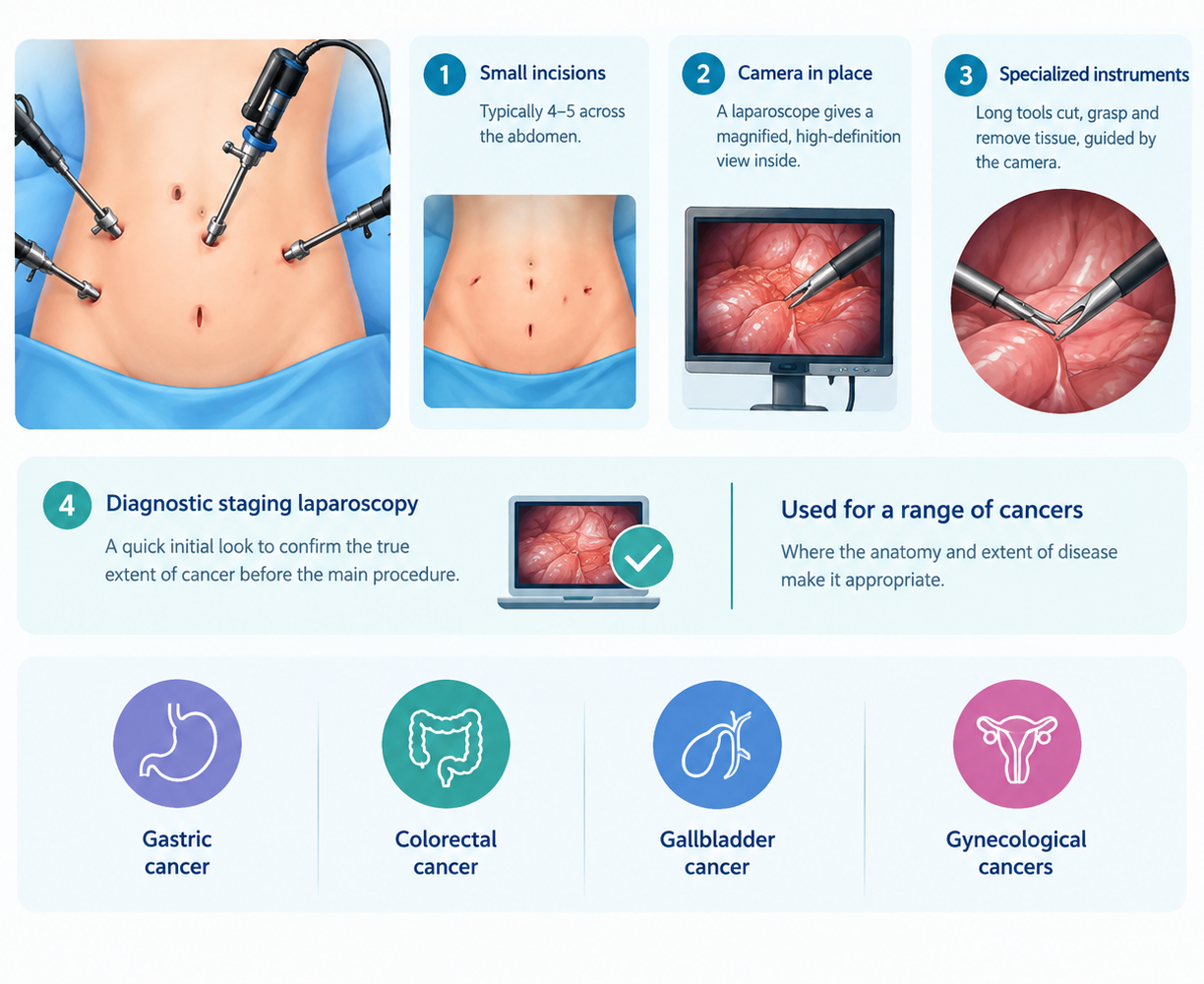
The technique relies on a handful of specific tools working together rather than one single piece of equipment.
- A few small incisions, typically four or five across the abdomen, replace the single long cut an open procedure would require
- A thin camera called a laparoscope gets inserted through one of them to give the surgeon a magnified, high definition view of the internal anatomy on a screen
- Specialized long instruments pass through the remaining incisions to actually cut, grasp, and remove tissue, guided entirely by what the camera shows rather than direct line of sight
- Every laparoscopic cancer case typically begins with a diagnostic staging laparoscopy too, a quick initial look confirming the cancer’s actual extent before the main procedure proceeds, since what imaging suggests beforehand doesn’t always match what’s found once a surgeon can see directly
This approach is used across a wide range of cancers now, gastric, colorectal, gallbladder, and gynecological cancers among them, wherever the anatomy and the extent of disease make a minimally invasive approach genuinely appropriate.
Why the Evidence Actually Backs This Up?

Why Choose MACS Clinic for Laparoscopic Cancer Surgery?
Dr. Sandeep Nayak’s team at MACS Clinic evaluates every case individually to confirm laparoscopic surgery is genuinely appropriate before recommending it, rather than defaulting to the technique simply because it’s available. Every procedure begins with proper diagnostic staging, so the surgical plan reflects what’s actually found rather than what imaging alone suggested going in. For cases where open surgery remains the better clinical choice, that honest recommendation gets made too, since the goal is always the approach that gives a patient the best outcome, not the smallest scar at the expense of a thorough cancer removal.
Want to know if laparoscopic surgery fits your own diagnosis? Reach the team at +91 9482202240.
FAQs
Is laparoscopic cancer surgery as effective as open surgery for removing cancer completely?
Yes, multiple large studies and clinical trials have found comparable long term survival and recurrence rates between laparoscopic and open surgery for several major cancer types.
Does laparoscopic surgery take longer than open surgery?
Often slightly, yes, the operation itself can take a bit more time, though that’s offset by considerably less pain and a faster overall recovery afterward.
Is every cancer patient a candidate for laparoscopic surgery?
No, suitability depends on tumor size, location, and extent of disease, some advanced or complex cases still require an open approach for complete, safe removal.
How much faster is recovery with laparoscopic cancer surgery compared to open surgery?
Many patients return to light activity within a few weeks rather than the many weeks open surgery typically requires, though the exact timeline depends on the specific procedure performed.
Reference
- MACS Advantages – MACS Clinic
- Is Gastric Cancer Curable – MACS Clinic
- A Comparison of Laparoscopically Assisted and Open Colectomy for Colon Cancer – PMC / NEJM
Disclaimer:This content is published for educational and informational purposes only.