

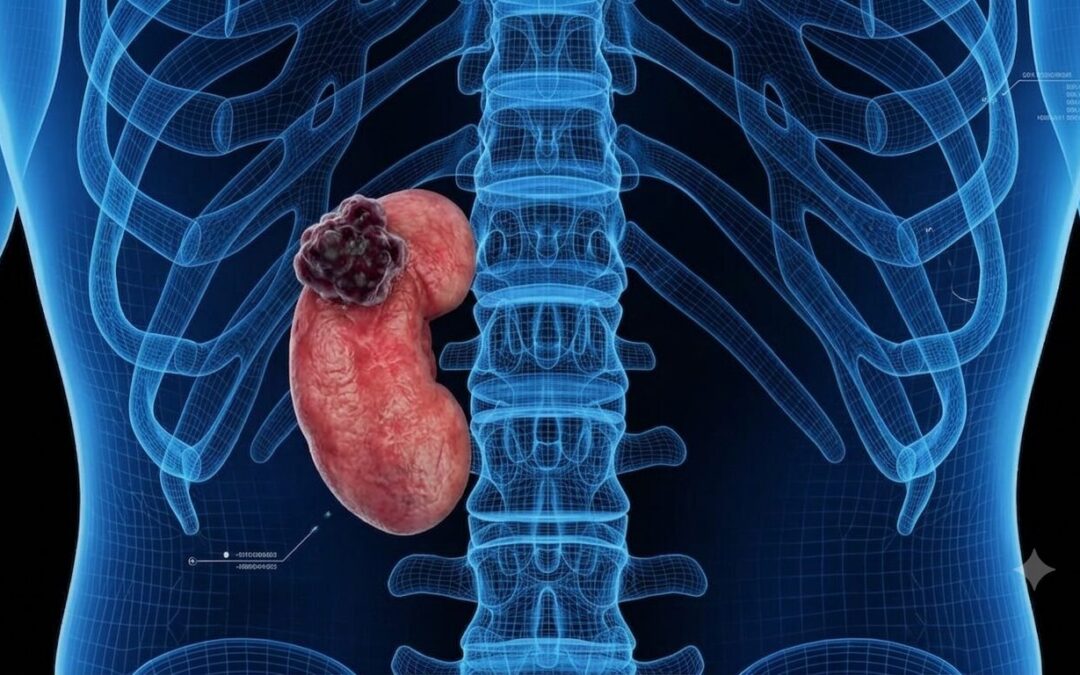
A partial nephrectomy takes out the tumour and a rim of healthy tissue around it, and leaves the rest of the kidney where it is. On paper, the ideal candidate has a small tumour, somewhere in the 4-7cm range, sitting near the edge of the kidney rather than buried inside it, with no sign the cancer has spread and normal kidney function to begin with. That’s the textbook answer. Real cases rarely line up quite that neatly, and there are a handful of situations where a surgeon will lean toward kidney-sparing surgery even when the tumour doesn’t quite fit the mould.get found and staged before surgery enters the picture.
Dr. Sandeep Nayak, Best Cancer Treatment in Bangalore, says size gets more attention than it deserves. “A centimetre or two of difference matters less than people assume. Where the tumour actually sits, and what shape the other kidney is in, usually decides the call before size does.”
So beyond size, what actually goes into that decision?
What Tumour Factors Decide Candidacy?
The tumour’s own characteristics are checked first, usually through cross-sectional imaging before surgery is even scheduled.
Size Sets the Starting Point: Tumours under 4cm (T1a) are the most straightforward candidates. Many centres now extend this to T1b tumours, roughly 4 to 7cm, when the location cooperates.
Location Often Matters More Than Size: A tumour growing outward from the kidney’s surface, an exophytic tumour, is easier to remove cleanly than one growing inward toward the collecting system or major blood vessels. Surgeons often score this formally using a nephrometry system that grades size, depth, and position together, and that score has a real influence on which technique gets recommended and how risky the operation is expected to be.
No Evidence of Spread: Imaging needs to rule out invasion into the renal vein or spread beyond the kidney. Once a tumour has moved past the kidney itself, partial nephrectomy is off the table regardless of how small the primary lesion looked.
A Single, Solitary Tumour Is the Easiest Case: Multiple tumours in the same kidney complicate things considerably and sometimes rule out the kidney-sparing approach entirely, depending on how they’re distributed.
Our Kidney Cancer page walks through how imaging and staging are used to build this picture before any surgical decision is made.
What Patient Factors Push Toward (or Away From) Partial Nephrectomy?
Beyond the tumour itself, a patient’s own kidney situation changes how strongly partial nephrectomy is recommended.
A Solitary or Functionally Solitary Kidney: If a patient only has one working kidney, whether from birth, prior surgery, or disease in the other kidney, sparing as much tissue as possible stops being a preference and becomes close to essential.
Bilateral Tumours: When both kidneys have tumours, removing everything entirely isn’t an option. At least one side gets a kidney-sparing approach by necessity, not by preference.
Baseline Kidney Function: Surgeons check eGFR before deciding. Patients who already have reduced kidney function have the least reserve to spare, so keeping as much tissue as possible matters most for them.
Genetic Syndromes Like Von Hippel-Lindau: These conditions cause tumours to keep coming back across a lifetime. Sparing kidney tissue at each surgery isn’t just about the current operation. It’s about protecting function for every procedure that follows.
Other Health Conditions: Diabetes, high blood pressure, existing kidney disease in the remaining tissue. These all affect how much functional reserve a patient has going into surgery and change what the safe threshold for tissue removal actually is.
Our Precision Oncology approach covers how these patient-specific factors get folded into surgical planning more broadly.
Why Choose the MACS Clinic for partial nephrectomy?
Dr. Sandeep Nayak’s team at MACS Clinic treats candidacy for partial nephrectomy as a combination of factors, not a single number on a scan report. Imaging findings, kidney function, tumour location, and the patient’s overall health are all reviewed together before any surgical recommendation is made. That assessment happens before surgery is scheduled, so patients know whether kidney-sparing surgery is genuinely on the table for their specific tumour, not after they’re already in the operating room.
If you’ve been told your tumour rules out partial nephrectomy and want that looked at properly, reach the team at +91 9482202240.
FAQs
What size kidney tumour qualifies for partial nephrectomy?
Under 4cm is the clearest yes. Between 4 and 7cm it depends heavily on where the tumour is sitting inside the kidney, not just how big it is.
Does tumour location matter more than size?
Often it does. A tumour near the surface is a very different surgical problem from one buried deep near the kidney’s central vessels, even if they measure the same on a scan.
Can someone with one kidney have a partial nephrectomy?
Yes, and in that situation it moves from being a preferred option to almost the only one. When there’s no second kidney to fall back on, preserving as much of the one that exists becomes the whole point.
Are patients with Von Hippel-Lindau disease candidates?
Usually yes, and the approach tends to repeat over time. These patients develop multiple kidney tumours across their lifetime, so kidney-sparing surgery at each occurrence is specifically planned to protect function for whatever comes next.
Disclaimer: This content is published for educational and informational purposes only.