

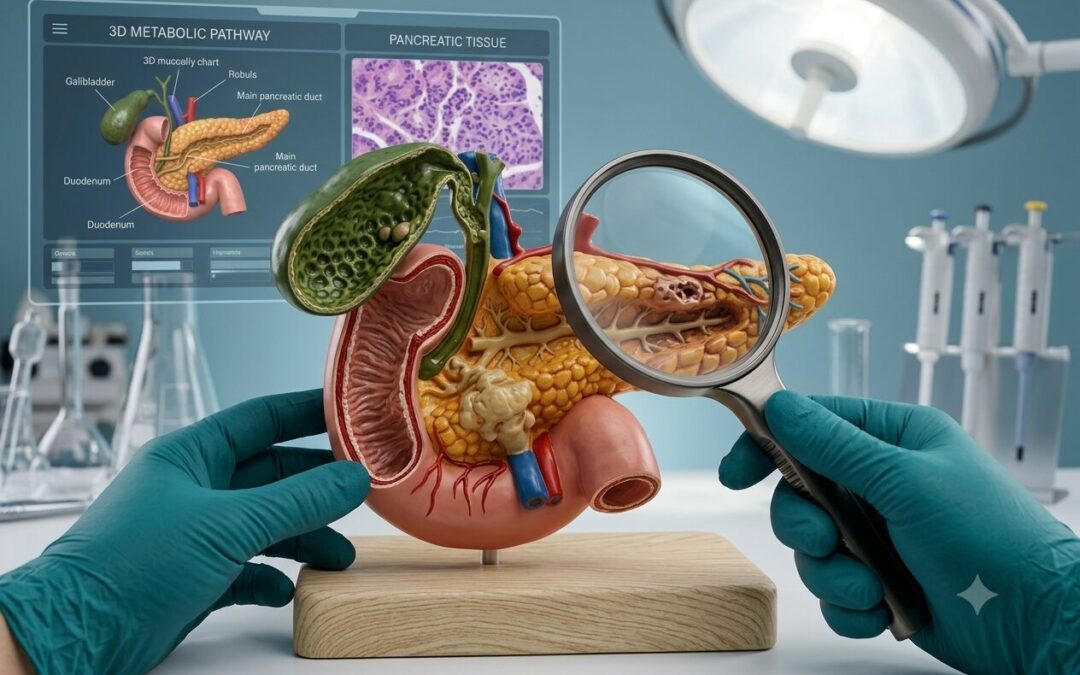
You can’t walk into a clinic and ask for a routine pancreatic scan. There’s no general population screening programme for pancreatic cancer not because no one thought of it, but because the baseline risk in the average person is too low and no test is accurate enough to justify it across the board. What exists instead is a tightly defined high-risk group of people whose genetics, family history, or pre-existing conditions push their lifetime risk above 5% and for those people, structured surveillance is not optional, it’s the only thing that gives surgery a realistic chance of being on the table.
According to Dr. Sandeep Nayak,who provides Best Cancer Treatment in Bangalore, “The goal of pancreatic screening isn’t just to find cancer early it’s to find precancerous lesions or stage 1 tumours in the small window where curative surgery is still an option. That requires knowing exactly who to look at.”
If you have a family history of pancreatic cancer or carry a known genetic mutation, that’s not something to monitor passively
Why Is Pancreatic Cancer Rarely Detected Before Stage 3?
Most cancers announce themselves eventually as a lump, bleeding, pain that won’t go away. Pancreatic cancer doesn’t work that way. It sits deep behind the stomach, surrounded by other organs, and causes nothing obvious until it has already grown into surrounding structures or spread elsewhere. By the time most patients get a diagnosis, the window for surgery has already closed.
- No Early Symptoms: Small pancreatic tumours cause no pain, jaundice, or weight loss. The pancreas doesn’t swell in a way you can feel, so the cancer grows silently.
- No Population Screening Test: There is no simple, cost-effective test (like a mammogram or colonoscopy) available to screen the general public for pancreatic cancer.
- Rapid Progression: Precancerous pancreatic lesions progress to invasive cancer much faster than polyps in the colon, closing the window for early intervention.
- Late Referral of Vague Symptoms: Early signals like mild back pain, fatigue, or indigestion are often mistaken for benign issues, delaying the order for a proper pancreatic CT scan.
For a deeper look at how surveillance catches other complex cancers early, read and explore our specialized Pancreatic Cancer Treatment
Who Actually Qualifies for Specialized Surveillance?
Mostly, it’s people with known genetic red flags. If you carry a BRCA2 mutation, have Lynch syndrome, or suffer from hereditary pancreatitis, you make the list. Family history matters heavily, too. Two or more first-degree relatives(your father and your brother, or your sister and your mother) with this cancer puts you at a lifetime risk ten times higher than average even if no genetic marker shows up on a test.
Then there are the clinical warning signs. Developing diabetes out of nowhere after age 50, without being overweight, is a massive red flag. The pancreas is failing before the tumor even shows up. Finally, catch incidental cysts (like IPMNs) on MRIs done for completely different reasons. Those need watching.
Understand the exact biology behind these risk factors in our full guide on early pancreatic cancer detection
Why Choose MACS Clinic for Pancreatic Cancer Risk Assessment?
Dr. Sandeep Nayak’s team at MACS Clinic doesn’t send high-risk patients home with reassurance. A strong family history, a known BRCA2 mutation, unexplained new diabetes after 50 any of those triggers a formal pancreatic assessment at the first visit. EUS or pancreatic protocol MRI, not a standard abdominal scan that misses what matters.
When a resectable tumour or high-grade precancerous lesion is found, the plan moves immediately. Pancreatic cancer doesn’t give second chances at the early stage. The patients who get to curative surgery are the ones whose risk was taken seriously before symptoms forced the issue. Those who want to discuss their family history or risk factors can reach the team at +91 8035740000
FAQs
Can a routine blood test detect early pancreatic cancer?
No. Tumor markers like CA19-9 miss early stages entirely and can spike for non-cancer reasons. You need specialized imaging to actually see it.
What are the subtle signs of pancreatic cancer before stage 3?
Usually, there aren’t any. When they do show up, it’s unexplained mid-back pain, sudden weight loss, pale stools, or diabetes after 50.
What is the best scan to detect pancreatic cancer early?
Endoscopic ultrasound (EUS) or a pancreatic protocol MRI. Standard abdominal CT scans miss the tiny, early-stage lesions.
My parents had pancreatic cancer. When should I get screened?
Talk to a genetic counselor. Screening usually starts at age 40, or 10 years before your youngest relative was diagnosed.
Disclaimer: This content is published for educational and informational purposes only.