
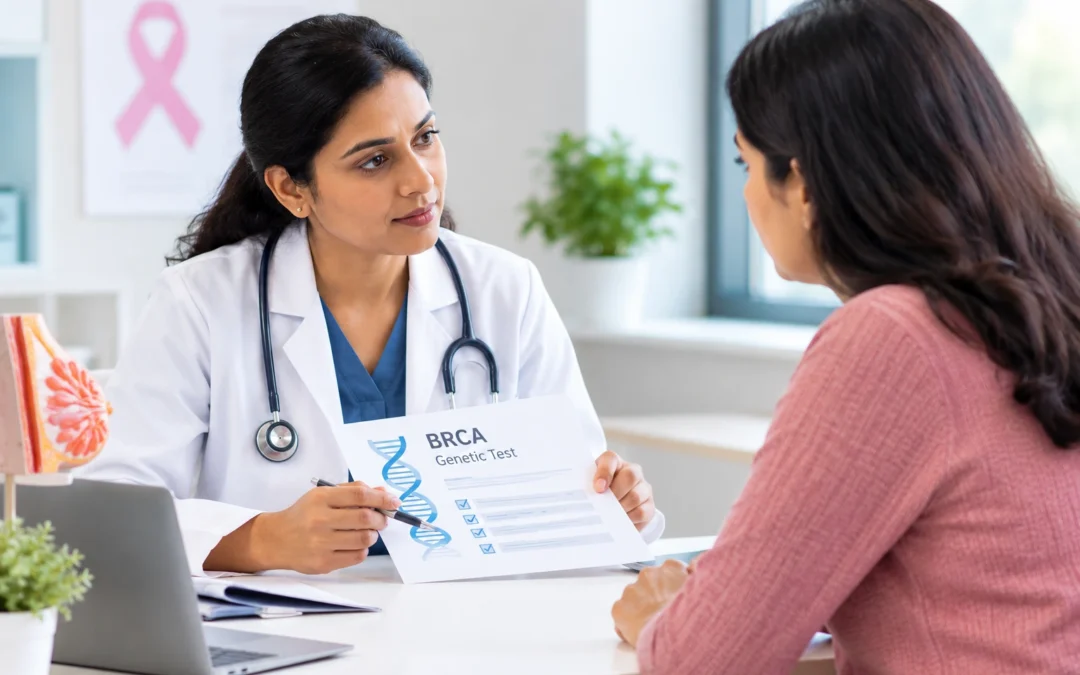
A BRCA test isn’t meant for everyone. If your risk is average and no one in your family has had breast or ovarian cancer, you usually don’t need one. It’s recommended if you’ve had breast cancer at 65 or younger, or if your personal or family history points to an inherited risk: breast cancer at a young age, ovarian cancer, a man in the family with breast cancer, or several relatives with the same cancer. Triple-negative breast cancer is another reason to test.
Dr. Sandeep Nayak, who provides cancer treatment in Bangalore says fear of the result stops many people from getting tested. “They worry about what the report might say. But the test isn’t the danger, not knowing is. If you carry a BRCA change, we can watch you more closely, and there are ways to lower the risk. And the result doesn’t stop with you. It tells your sister, your daughter, your cousins what to look for. In most families, we start by testing the person who had cancer, not the healthy relatives.”
Unsure about your inherited cancer risk? Learn how family history can guide genetic counselling and screening decisions.
BRCA Testing for Breast Cancer: Who Qualifies?
Guidelines are fairly clear on who should be offered a test. These are the main groups:
- You’ve been diagnosed with breast cancer. Current guidelines say anyone diagnosed at 65 or younger should be offered BRCA testing, even with no family history. Older patients qualify if the cancer is triple-negative, if a PARP inhibitor drug might be an option, or if there’s a family history. Our hereditary breast cancer page explains what runs in families.
- Breast cancer showed up young in your family. A relative diagnosed at 50 or younger is a standard trigger. So are two or more relatives with breast cancer, particularly on the same side of the family.
- Other cancers in the family count too. Any ovarian cancer, a man with breast cancer, or pancreatic or aggressive prostate cancer in the same family as breast or ovarian cancer should prompt a conversation with a doctor.
- A BRCA change is already known in your family, or you don’t know your family history. If a relative has tested positive, you can be tested for that exact change. If you were diagnosed at 50 or younger and little is known about your relatives (small families, adoption, lost contact), that’s a reason to test too.
Who Needs BRCA Genetic Testing, and What the Result Means?
What Determines the Right Treatment Approach?
After testing, there’s no single route. A few things decide what makes sense for you:
- Whether you’ve already had breast cancer. If you have, the result can shape the surgery, for instance lumpectomy or mastectomy, and the drugs that make sense. Our breast cancer surgeries page covers the options.
- Your age and family plans. Surgery to remove the ovaries lowers cancer risk but affects fertility and brings on menopause, so the timing is a personal decision.
- Which gene and which change. BRCA1 and BRCA2 carry somewhat different risks, and other genes such as PALB2 matter too. A wider panel is sometimes advised.
- Your family history. The number of relatives affected, and how old they were, changes how strongly the result points to a plan.
- What you’re comfortable with. Some people prefer close monitoring, others prefer surgery. A genetic counsellor and a surgeon can walk you through both, and neither choice is wrong.
Key Takeaways
-
A BRCA test isn’t for everyone. It’s mainly for people with a breast cancer diagnosis or a family history that suggests inherited risk.
-
Been diagnosed with breast cancer at 65 or younger? You should be offered the test, even if no one else in your family has had it.
-
Some family patterns are worth raising with a doctor: breast cancer at 50 or younger, any ovarian cancer, a man with breast cancer, or several relatives with it.
-
A positive result is a higher risk, not a sure thing. It can mean closer screening, or a conversation about surgery or targeted drugs.
-
If you’re unsure where you fit, you can call the clinic on +91 9482202240.
FAQs
Do I need a BRCA test if no one in my family has had cancer?
Usually not, if you’ve never had breast cancer. But if you’ve been diagnosed at 65 or younger, you should be offered one even with a clear family history, because it can still affect your treatment.
Should I get tested if my mother or sister had breast cancer?
It depends on their age when it was diagnosed and who else in the family has had cancer. Often the best first step is for the relative who had cancer to be tested, because her result tells everyone else what to look for.
What does a positive BRCA result mean for me?
A higher chance of breast and ovarian cancer, but not a certainty. You’d usually be offered closer screening and a talk about options, which may include preventive surgery. Many people with a BRCA change never develop cancer.
How is a BRCA test done?
It’s a simple blood or saliva sample, and results usually take a few weeks. You should have a counselling session before the test and another to go through the result.
Reference
- Germline Testing in Patients With Breast Cancer: ASCO-Society of Surgical Oncology Guideline, Journal of Clinical Oncology
- ASCO and SSO Update Genetic Testing Guidelines for People With Breast Cancer, Breastcancer.org
- BRCA1- and BRCA2-Associated Hereditary Breast and Ovarian Cancer, GeneReviews
Disclaimer:
This content is published for educational and informational purposes only and is not a substitute for medical advice. Please consult your doctor before changing any treatment.