

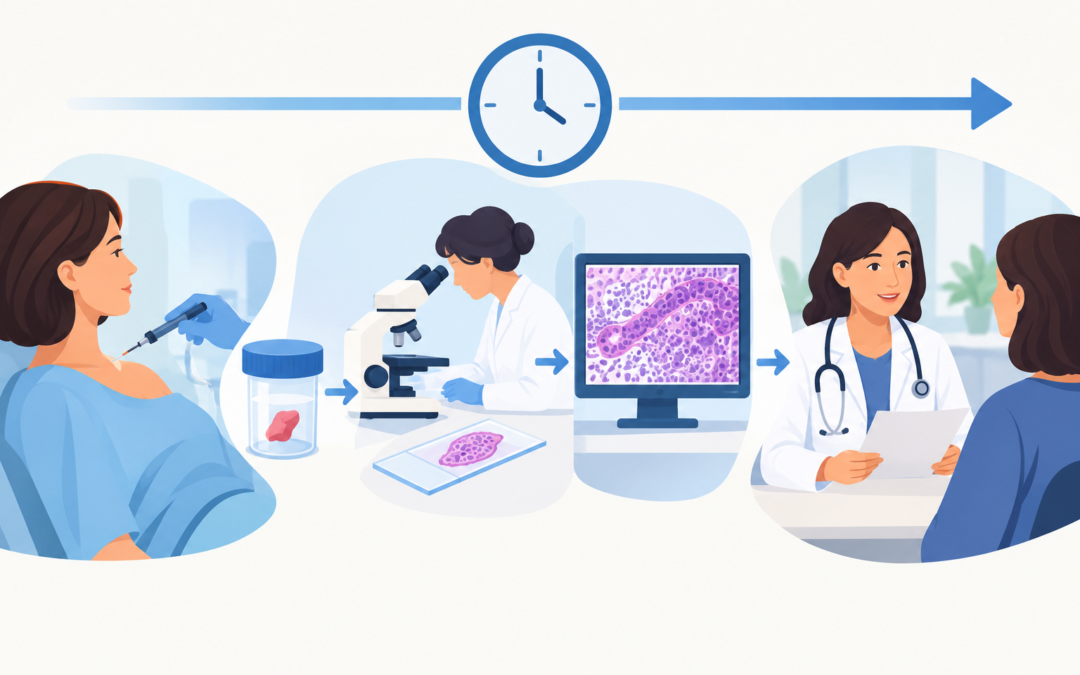
Routine biopsy results typically take 2 to 7 days, but that number stretches to 2 to 3 weeks when complex or specialized testing gets added on top. So why such a wide range for what feels like it should be one simple answer? Because “cancer diagnosis” isn’t one single test, it’s a sequence, and each step in that sequence, the initial sample, the pathology review, the molecular profiling if it’s needed, runs on its own timeline that stacks onto the ones before it.
Dr. Sandeep Nayak, known for the Best Cancer Treatment in Bangalore, sees how much this uncertainty weighs on patients, often more than the procedure itself. “The biopsy takes minutes. The waiting is what actually feels unbearable. People want a single number, and I understand why, but the honest answer depends on which test was done and whether anything beyond a standard pathology read is needed. What I can promise is that we don’t let results sit once they’re ready, they get reviewed and communicated the moment they land.”
Waiting on results and trying to understand the timeline?
The Actual Timeline Across Different Test Types
Different diagnostic tests move at genuinely different speeds, and knowing which one you actually had changes what to expect:
- FNAC, a fine needle aspiration, is the fastest option, results typically come back in 24 to 48 hours since it only requires examining individual cells rather than full tissue architecture
- Core biopsy takes a bit longer, usually 3 to 7 days, because the tissue sample needs to be processed, sectioned, stained, and reviewed in full by a pathologist
- Ultrasound-guided FNAC of a suspicious lymph node can come back within 48 hours specifically, which matters a lot when someone’s anxious about a new lump
- When molecular profiling, receptor status, mutation testing, MSI status, gets added on top of a standard biopsy, the full picture can take up to two weeks depending on exactly which tests are required
None of these timelines are arbitrary. Each one reflects how much biological information actually needs to be extracted and reviewed before a result means anything clinically useful.
Why the Full Process Sometimes Takes Longer Than Expected?
Why Choose MACS Clinic for a Diagnosis Timeline You Can Actually Follow?
Dr. Sandeep Nayak’s team doesn’t leave patients guessing while results move through separate departments, biopsy, pathology, molecular profiling, and tumor board review happen in a coordinated sequence, and the plan gets confirmed before a patient leaves without knowing what comes next. When a result is genuinely ready, it gets communicated immediately rather than held until the next scheduled appointment slot. For patients anxious during the wait itself, that clarity about what’s actually happening behind the scenes tends to matter almost as much as the result when it finally arrives.
Waiting on your own results and want a clear picture of the timeline? Reach the team at +91 9482202240.
FAQs
Why did my biopsy take longer than the timeframe I was told?
Complex cases, an inconclusive first sample, or additional molecular testing added after the initial read can all extend the timeline beyond the standard estimate given upfront.
Can I ask for results to be expedited if I'm especially anxious?
It’s worth asking directly, some labs and situations allow for faster turnaround, though the biological processing time for certain tests has a genuine minimum that can’t be skipped.
Does a longer wait mean the result is more likely to be serious?
No, a longer wait usually just reflects additional testing being run for a complete picture, not that the news itself is worse; simple, clearly benign cases can sometimes take just as long as complex ones depending on lab scheduling.
What should I do while waiting for results?
Beyond staying reachable for your care team’s call, there’s genuinely little to do differently, distraction and support from people around you tend to help more than trying to predict the outcome.
Reference
- FNAC vs Core Biopsy: Which Is More Accurate, MACS Clinic
- How Cancer Staging Is Done Before Surgery, MACS Clinic
- When Is a Second Biopsy Needed After First Results, MACS Clinic
Disclaimer:This content is published for educational and informational purposes only.