

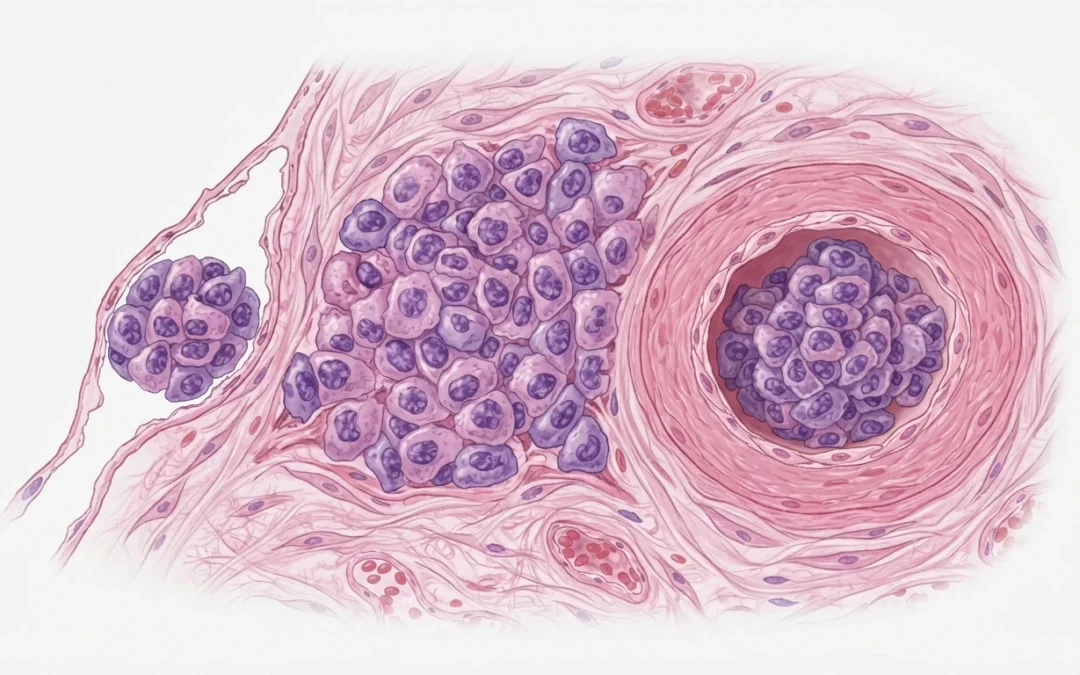
Lymphovascular invasion, usually shortened to LVI, is something a pathologist sees under the microscope. Cancer cells are found inside the walls of tiny blood vessels or lymph vessels in or around the tumour. It shows that tumour cells have reached channels that could carry them away from the original site, but it does not by itself prove they have gone anywhere. So why does a short phrase in a pathology report get so much attention? Because it is one of the clues doctors use to judge how likely a cancer is to travel, and in some cancers it can nudge the decision about whether more treatment is needed after surgery.
Dr. Sandeep Nayak, who provides the Best Cancer Treatment in Bangalore, notices that patients often stop reading when they reach it. “It tends to be one line near the bottom of a long report, and people see the word invasion and assume the worst. What it really tells us is that the tumour was close to the roads, so to speak. It raises the chance that some cells got out, and it makes us look harder at the lymph nodes and think carefully about follow up. It does not tell us that they did get out.”
Found this phrase in your own report and want it explained?
What Is Lymphovascular Invasion? The Meaning Behind the Words

The lymphovascular invasion meaning is easier to follow once the terms are broken down.
- The vessels involved. Every tumour is surrounded by very small channels. Lymph vessels drain fluid towards the lymph nodes, and blood vessels carry blood. When cancer cells are seen sitting inside either kind of channel, the report says LVI is present.
- Something only a microscope can show. The pathologist finds it on slides made from the removed tissue after surgery. A scan cannot see it, which is why it appears in the pathology report and not in the imaging.
- Different names for similar findings. Reports sometimes separate lymphatic invasion from vascular, or venous, invasion. You may also see angiolymphatic invasion, lymphovascular space invasion (LVSI) in gynaecological cancers, or microvascular invasion in liver cancer.
- What it is not. LVI is not the same as cancer found in a lymph node, which is reported separately, and it is not perineural invasion, which involves nerves. Most importantly, it is not proof of metastasis. Our post on what metastatic cancer is and how it spreads explains the difference between cells having the opportunity to spread and cancer actually being found elsewhere.
- Sometimes a judgement call. Small gaps that form around a cluster of cells during slide preparation can look like vessel invasion, so pathologists use special stains to confirm it, and some reports describe LVI as suspicious or indeterminate rather than clearly present.
How Does Lymphovascular Invasion in a Pathology Report Change the Plan?

What is lymphovascular invasion going to mean for your own treatment? That depends on the cancer, and in several places it carries real weight.
- A higher chance of lymph node involvement and recurrence. In many cancers, including breast, colorectal, prostate, bladder and stomach cancer, LVI is linked with a greater chance that nearby nodes are involved and that the disease may return. Our post on whether cancer can come back after surgery explains how doctors think about that risk.
- Closer attention to the lymph nodes. The finding can lead the team to look more carefully at the nodes, and in some cancers the question of how much of the node area to treat comes up, as covered in our post on sentinel node biopsy versus full dissection.
- Extra treatment in some cancers. In stage II colon cancer, for example, LVI is one of the high risk features that can tip the decision towards chemotherapy after surgery, a choice discussed in our post on adjuvant versus neoadjuvant chemotherapy. It also plays a part in some early endometrial and testicular cancers.
- An occasional effect on stage. In a few cancers, testicular cancer being one, LVI itself changes the T category. In most it does not change the stage but is recorded beside it, as described in our post on what the TNM numbers mean.
- A tighter follow up schedule. Even when no extra treatment is added, LVI can mean scans and blood tests are scheduled a little more closely.
It is one factor among many. A report that says LVI was not identified is reassuring, but it is not a guarantee, and a report that says it was present is a reason for a plan, not for alarm.
What Determines the Right Treatment Approach?
The same line in a report can lead to different decisions, depending on a few things.
- The type of cancer. LVI carries a lot of weight in some cancers and much less in others, so the cancer type decides how the finding is used.
- The stage and the lymph nodes. LVI is read alongside tumour size and whether any lymph nodes are involved.
- The grade and other features. A high grade tumour with LVI is viewed differently from a low grade tumour with a small amount of it.
- How much LVI there is. A single focus is not the same as extensive involvement, and good reports say which it is.
- Molecular and biomarker results. These can show whether the tumour has features that make extra treatment more or less worthwhile.
- The patient’s health and wishes. Age, fitness and personal priorities shape how much added treatment is sensible.
- A joint review. At MACS Clinic the pathology report is discussed by the surgical, medical and radiation teams together, in the manner described in our post on what a tumour board is.
Key Takeaway
- Lymphovascular invasion means cancer cells were seen inside tiny blood or lymph vessels near the tumour, which raises the chance of spread but does not prove it.
- It is found under the microscope after surgery, so it shows up in the pathology report and not on scans.
- In some cancers it influences whether treatment is added after surgery and how closely follow up is planned.
- For questions about your own report, you can contact the clinic at +91 9482202240.
FAQs
Does lymphovascular invasion mean the cancer has already spread?
No. It means tumour cells have entered vessels that could carry them elsewhere, and that raises the risk. Whether any cells actually settled somewhere else is judged from the lymph nodes, scans and follow up.
Is lymphovascular invasion the same as lymph node involvement?
No. Lymph node involvement means cancer has been found inside a node. LVI means cancer cells are inside the vessels at the tumour itself. They are reported separately, and they often go together, but one does not guarantee the other.
Will I need chemotherapy if my report says LVI is present?
Not necessarily. In some cancers it is one of several reasons that make chemotherapy more likely. In others it has little influence on the decision, so it depends on the cancer, the stage and the other findings in the report.
Can lymphovascular invasion be seen on a scan?
No. It is a microscopic finding, visible only when the pathologist examines the tissue on slides after surgery or a biopsy.
Disclaimer
This content is published for educational and informational purposes only.
References:
1. Lymphovascular Invasion and Prognosis – PubMed, Lymphatic Vascular Invasion and Survival
2. Lymphovascular Space Invasion in Cervical Cancer – PubMed, LVSI in Cervical Cancer